Future of Desi Ghee in India: Trends in Health, Exports and Regulations
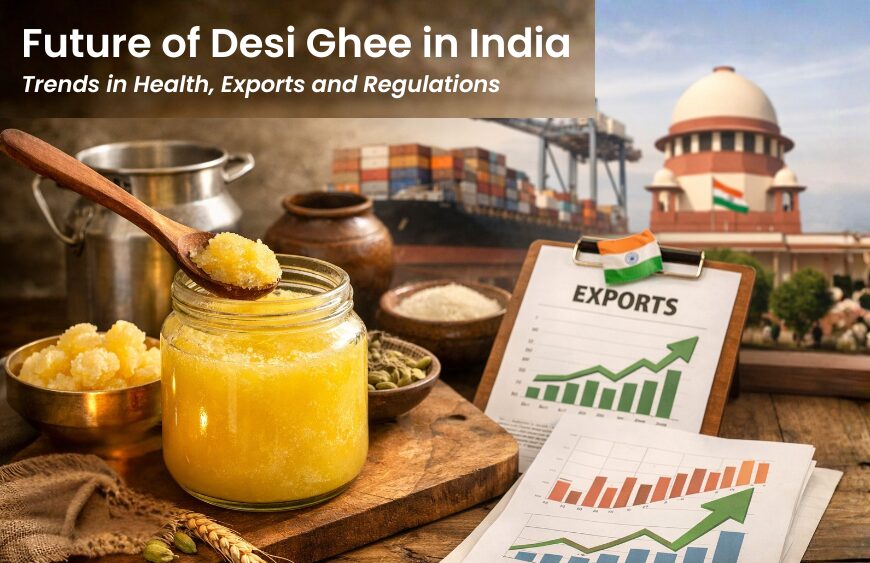
Introduction
For centuries, desi ghee has survived cultural changes in India, yet its place in the modern Indian diet has never been more contested. Once Desi ghee was an integral part of everyday cooking but became less favorable towards the late 20th Century because of the fears of saturated fats and cardiovascular health issues. Recently, desi ghee is making a comeback, and at the same time, is being labeled in a variety of ways like “ancient superfood” or “Ayurvedic fat.
The future of desi ghee in India cannot be understood through nostalgia or marketing alone. It must be examined through three interlinked factors:
- health science
- global trade dynamics
- regulatory evolution
Together, they reshapes how ghee is consumed, tested, exported and trusted.
In this article, we will describe in detail how these three influences and what they mean for the consumer, producer, and future political and government policy on desi ghee over the next 10 years.
Who This Article Is For
This article is written for:
- Indian households trying to understand whether desi ghee still popular in modern diets.
- Health conscious consumers who are confused about the changing trends in nutrition.
- Entrepreneurs, producers and exporters tracking the future of ghee.
- Readers interested in food regulation and related issues.
Health Trends Shaping the Future of Desi Ghee in India
From Saturated Fat Fear to Traditional Fat Revival
For generations, desi ghee was the primary visible fat in Indian kitchens. Its use was guided by seasonal availability, regional cuisine, and household economics rather than nutrient charts. This changed sharply in the latter half of the twentieth century, when global nutrition narratives began equating saturated fats with cardiovascular disease.
As refined vegetable oils entered the Indian market, ghee consumption drops, particularly in city areas. The message about healthy eating has simplified the complex lipid science into an easy message for consumers that has pushed ghee into the background.
As Nutrition Science continues its growth, there has been a significant shift in the research direction to consider overall dietary patterns, the metabolic environment, how food is prepared and lifestyle choices. From these new studies, desi ghee is re-evaluated not as a health solution, but as a traditional fat that can be included responsibly..
This shift does not mark a return to over consumption. Instead, it brings a more balanced understanding that the future of desi ghee lies in moderation, quality and context.
Desi Ghee Through the Lens of Modern Nutrition Science
Modern nutrition science shows that ghee contains almost exclusively milk fats. It is currently being looked at by nutritionists globally because of its stability during high heat cooking which is an essential part of Indian cooking techniques like deep frying, tempering(tadka) and sauteing..
Unlike many cooking oils that can be used for cooking but degrade rapidly when exposed to high temperatures, this stability enables ghee to preserve its chemical structure. It also plays a role in better absorption of fat soluble vitamins naturally present in foods.
However, modern dietary guidelines remain cautious. Ghee is not positioned as a therapeutic ingredient but as a visible fat that should be consumed generously in a balanced way. The future of desi ghee in health will depend on responsible communication that avoids both demonization and glorification.
Ayurveda’s Role in Shaping Future Perception
According to Ayurveda, ghee is often referred to as samskara anuvartana which means a substance that carries the properties of herbs and foods cooked with it. These concepts are now explored through scientific frameworks such as bioavailability and lipid transport.
Ayurveda will continue to develop in the future, but its focus will not be on making medical claims regarding the use of ghee or any other substance. Rather, it will focus on providing customer context regarding their respective usage, seasonality and digestion.
Breed-Specific Ghee and the Return of Provenance
Why Consumers Are Asking “Which Cow?”
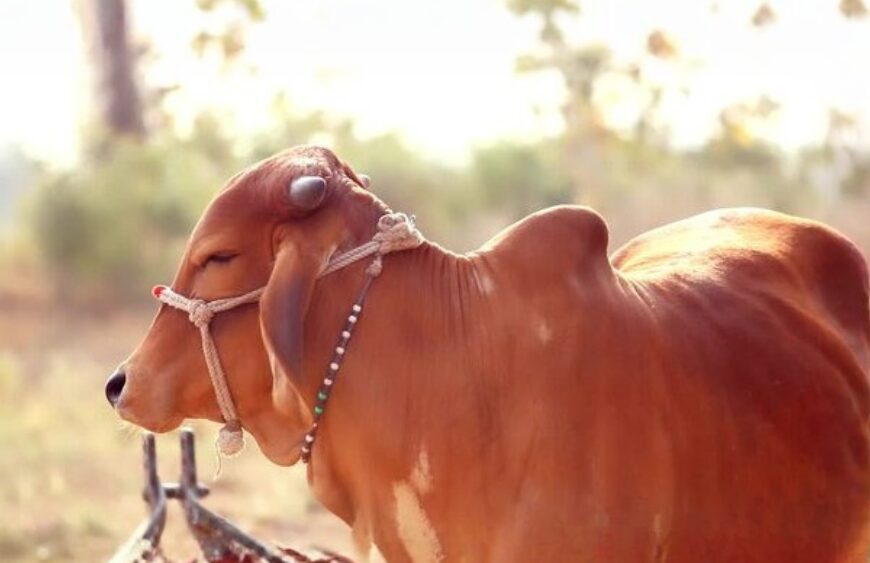
As new consumer interest in the origins of desi ghee continues to grow in India, it appears that consumers are now much more inclined than ever to identify the source of their ghee, including the breed of cow and the method used to produce it.
The rise of this trend to uncover the provenance and traceability. Consumers no longer want generic “cow ghee”; they want to understand where it comes from and how it is made.
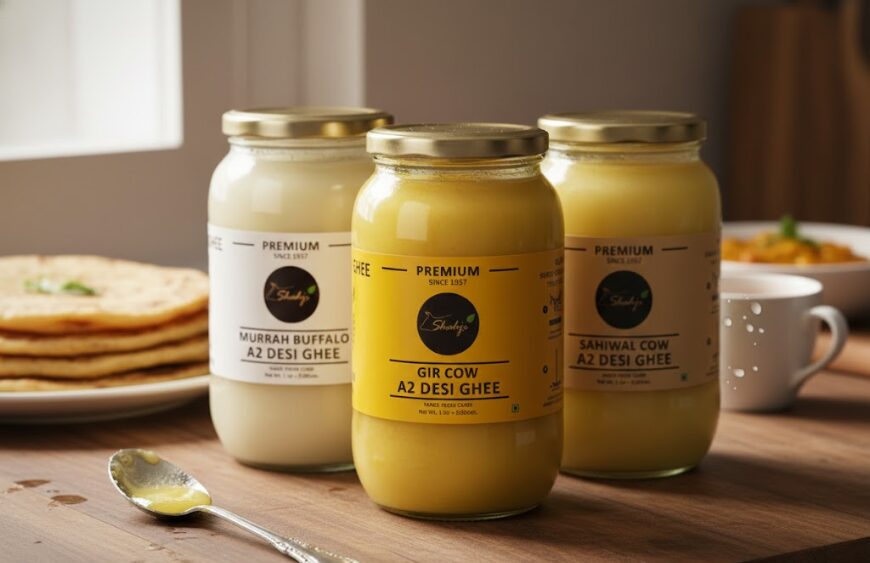
This has bought interest in indigenous breeds such as Gir and Sahiwal cows, whose milk characteristics differ subtly due to genetics, feed and environment.
The Place of Buffalo Ghee in the Future
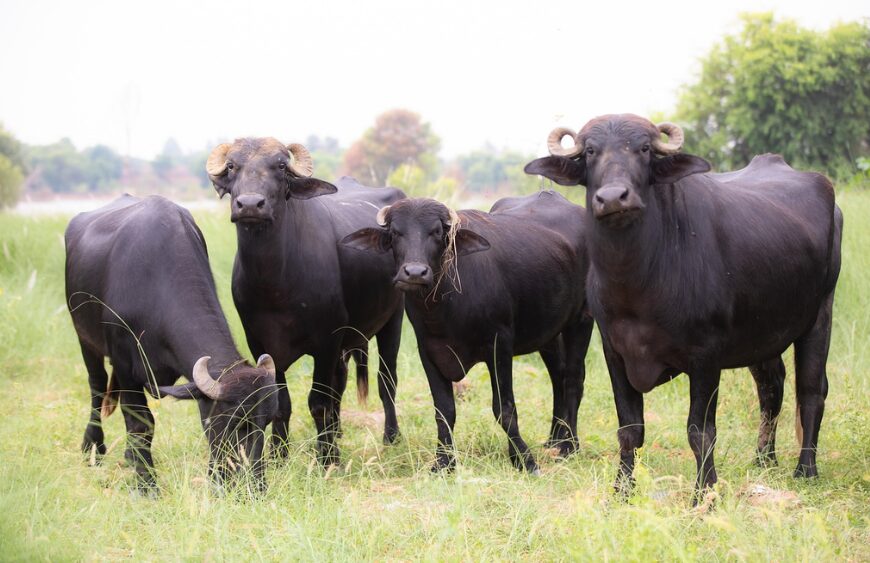
While ghee made from cow’s milk is widely recognized for its health benefits, buffalo ghee plays a major role in the dairy economy of India. In addition, buffalo ghee remains a popular ingredient in traditional Indian sweets, for festive cooking, and in regions where buffalo milk is the primary dairy source.
From a sustainability point of view, buffalo ghee plays an important role in farmer livelihoods because of higher fat yields. The future of desi ghee is therefore plural, accommodating different types for different culinary and economic needs.
Global Demand and Export Growth of Indian Ghee
Why the World Is Looking at Indian Ghee
The high global demand for Indian ghee is increasing because of factors including the growing popularity of Indian food among the Indian diaspora looking for authenticity and cultural connection, as well as the constant increase in international curiosity towards traditional fats and ethnic cuisines.
Indian ghee occupies a unique position over the world as it is both a cultural product and a dairy fat with defined analytical standards.
Export Markets and Their Expectations
Major markets for exports include North America, the Middle East, the United Kingdom and the parts of Southeast Asia. All of these international markets have stringent quality standards and labelling and testing requirements, often exceeding the domestic norms.
Hence, export growth is in the favour of organized producers who invest in documentation, quality control and regulatory compliance.
Compliance as a Competitive Advantage
For exporters, the future lies in aligning with international frameworks such as Codex Alimentarius while maintaining Indian authenticity. Compliance is no longer a cost, it is a trust signal.
Regulation and Food Safety: The Backbone of Trust
FSSAI and the Evolution of Ghee Standards
The FSSAI establishes standards for Ghee in India based on the percentage of moisture in Ghee, the % of milk fat in Ghee and also on the levels of certain Analytical Constants, such as the Reichert-Meissl and Butyro-Refractometer Values.
The current trends of the FSSAI regulatory function show an increasing trend toward the detection of Ghee adulteration, increasing Labeling clarity and Enforcement of Ghee quality standards. This trend is likely to continue to increase as people become more aware of these issues.
Adulteration Risks and the Future of Testing
With increasing prices for Ghee there is now an increase in the incentive to adulterate Ghee. Therefore, the success of Desi Ghee in the future will be dependent upon more advanced Testing Methods, Digital Traceability, and Consumer Education.
The companies that will lead the development of the Desi Ghee market will be the ones that have a commitment to transparent and clear testing protocols.
Economics of Desi Ghee: From Farmer to Consumer
Impact on Indian Dairy Farmers
Supporting sustainable development of ghee demand would help supporting indigenous breed, increase farmer revenues and promote ethical methods of dairy farming. However, unrealistic price marketing may upset this equilibrium between farmers and consumers.
Organized and Unorganized Sector Coexistence
In India, ghee production is still primarily unorganized. The future will probably consist of increasing levels of formalization in the industry with small producers remaining in business provided that there is increased transparency and standardization.
Making Sense of Choice in a Crowded Market
As desi ghee gains renewed attention, consumers face confusion rather than clarity. Labels promise purity, tradition and health—but few explain their processes honestly.
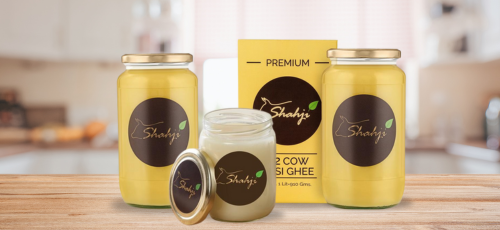
Shahji Ghee follows a documentation-first approach, combining traditional Bilona preparation with breed-specific sourcing and modern quality checks
Frequently Asked Questions – FAQs
Will desi ghee consumption increase in India?
Yes, but selectively and knowledge-driven.
Will regulations tighten further?
Almost certainly, especially around traceability.
Is exporting ghee sustainable long-term?
Yes, with compliance and consistency.
Is ghee healthy for everyone?
When used in moderation as part of balanced diets.
Further Reading & References
Indian Regulatory Standards (FSSAI)
- FSSAI – Manual of Methods of Analysis: Milk & Milk Products / Dairy & Dairy Products
The official laboratory reference document for analyzing milk and dairy products, including constant values such as Reichert-Meissl (RM) and Butyro-Refractometer (BR), which are used in ghee quality testing.
https://www.fssai.gov.in/cms/guidance-manuals.php
Dairy Science Research
- National Dairy Development Board (NDDB) – Dairy Research & Publications
The NDDB publishes research on dairy science, milk composition, processing, and quality systems that underpin scientific understanding of milk fats and ghee production.
https://www.nddb.coop/english
Nutrition and Food Policy Insights
- ICMR–National Institute of Nutrition (NIN) – Dietary Guidelines for Indians
Government-endorsed dietary guidelines recommending balanced use of visible dietary fats—including ghee—in the context of Indian diets and cultural food patterns. These guidelines are widely followed by nutrition professionals.
https://www.nin.res.in/downloads/DietaryGuidelinesforNINwebsite.pdf
Written by & Updated
Written by: Shahji Ghee Knowledge Team
Last Updated: January, 2026
Related Articles