How to Store Ghee in Indian Weather: Shelf Life, Containers and Do’s & Don’ts

Introduction: How to Store Ghee in Indian Weather
Ghee is an essential part of Indian nutrition and is used daily cooking. Climate conditions such as heat, high humidity, rainy weather and changing temperature levels can impact how ghee behaves over time.
Many people are think that ghee does not need specific storage because it is traditonally considered being shelf stable. While ghee is much stable than other fats like butter and refined oils, improper storage can still result in:
- Alter aroma and flavor
- Cause oxidation
- Reduce nutritional value
- Introduce moisture contamination
- Affect texture and grainy structure
This article provides a complete, informed, climate-specific guide for storing ghee in Indian conditions – including shelf life, containers, daily handling practices, and common mistakes to avoid.
Who Is This Article For
This guide is particularly helpful for:
- People buying large quantities of ghee and store it for months.
- Houses in hot and humid geographic regions of India.
- Health-conscious individuals concerned about oxidation and fat quality.
- Parents who prepare meals each day with ghee for their children.
- Ayurveda followers who want traditional wisdom explained scientifically.
- Home cooks shifting from refined oils to traditionally prepared ghee.
- people who want to buy premium A2 ghee.
Understanding Ghee’s Composition: Why It Is Shelf Stable
Before getting into ways to store ghee, it’s essential to know what makes ghee different from butter.
1. Low Moisture Content
When making ghee, the water content along with milk solids is removed. All that remains is pure fat. Ghee has very little water in it which is a genuine reason for the reduced growth of bacteria and moulds.
Bacteria and fungi need moisture to reproduce. Ghee can spoil less quickly than butter because of the very low water content.
2. High Saturated Fat Content
Ghee is mostly made from saturated or monounsaturated fat. Saturated and monounsaturated fats are much stronger and more stable within their structure than polyunsaturated fats that are present in many vegetable oils.
Greater stability means:
- Slower oxidation
- Better heat tolerance
- Longer shelf life
3. Natural Antioxidant Compounds
Ghee contains some fat-soluble vitamins, particularly vitamins A and E, which act as antioxidative compounds. These vitamins can help to keep ghee from going rancid but can be destroyed if ghee is exposed to excessive heat, light or air.
However, “stable” does not mean “invincible.” Improper storage can still led to oxidation.
Shelf Life of Ghee in Indian Weather
Shelf life of ghee depends on preparation method and storage conditions.
1. Unopened Ghee jar
If stored in a cool, dry place away from direct sunlight:
- Ghee will last about 9 to 12 months.
- Ghee that is prepared using traditional methods like Bilona method can remain stable for even longer.
Always check the expiry date recommended by the manufacturer.
2. Opened Ghee jar
Once the jar opened, ghee is exposed to oxygen and environmental moisture. Under Indian conditions:
- If stored properly at room temperature – about 4-6 months.
- If stored in the fridge – 8-9 months.
Humidity and heat reduces the shelf life of ghee.
3. Shelf Life in Different Indian Regions
Hot & Dry Regions (Rajasthan, Central India):
Higher temperatures may melt the ghee but dryness reduces moisture contamination risk.
Humid Coastal Regions (Mumbai, Chennai, Kerala):
Because of the humid conditions, greater exposure to moisture on the ghee can reduce the shelf life.
Cold Regions (Himachal, Kashmir):
Ghee will solidify at a colder temperature and once solidified, it will remain stable longer than in warmer regions.
How to Identify Spoiled Ghee
Ghee rarely spoils suddenly. Instead, it gradually becomes rancid.
Signs that ghee has oxidized or rancid:
- The ghee will smell sour or sharp.
- It will a bitter aftertaste.
- It will darkened unusually.
- Ghee will become sticky or too greasy in texture.
- There are signs of mold, which is rare but possible if moisture contamination is there.
If you notice any of these changes, discard the product.
Choosing the Right Container for Storing Ghee
The container you use to store ghee will affect how quickly it oxides or develops moisture.
1. Glass Containers (Highly Recommended)
Glass is chemically non reactive so it does not react with any fat.
Advantages:
- Glass does not leach chemical into ghee.
- Airtight sealing is possible in glass.
- Glass containers are easy to clean.
- Glass containers do not retain odours from prior contents.
2. Stainless Steel Containers
Good quality stainless steel will provide a stable and protective environment for ghee.
Advantages:
- Opaque which can easily blocks the light.
- It will last for a long time.
- It is a traditional storage method.
- Ensure the lid seals tightly.
3. Food-Grade Steel Tins
These containers are commonly found in traditional households and in bulk ghee storage.
- The interior lining must be intact.
- Must have an airtight seal.
- Must not be rusting.
4. Plastic Containers (Not Ideal)
Plastic is most undesirable for long-term storage.
Plastic can:
- Absorb odor from previous contents.
- Possibly leach harmful chemicals into the ghee over time.
- Moisture may easily enter in the plastic container.
Should You Refrigerate Ghee in India?
This is one of the most common questions.
Refrigeration is not Required:
- If your kitchen’s temperature is below 30°C.
- You use ghee on daily basis.
- If your ghee container remains airtight.
Room temperature storage is sufficient.
When Refrigeration Is Advisable
- Extremely hot summers when temperature is above 35–40°C.
- High humidity regions.
- Long-term storage more than 6 months.
Refrigeration slows down the oxidation but may alter grain texture.
Step-by-Step Guide: How to Store Ghee Properly at Home
Step 1: Choose the Right Container
Transfer ghee into:
- Clean, dry glass jar or a Stainless steel container.
- Make sure there is no moisture inside it.
Step 2: Keep It Airtight
- Exposure to oxygen can led to oxidation.
- Close the lid tightly after each use.
Step 3: Store Away from Light
Avoid keeping ghee near:
- Gas stove
- Kitchen window
- Direct sunlight
- Light degrades fat-soluble vitamins.
Step 4: Avoid Moisture Contamination
- Always use a dry spoon.
- Never use a wet spoon or ladle to take the ghee out.
- Don’t use the same spoon to take out the ghee after stirring dal or curry.
- Even a small amount of water can reduce the shelf life of ghee.
Step 5: Avoid Cross Contamination
- Do not mix leftover melted ghee back into main jar.
- If ghee was heated separately, store it separately.
Do’s and Don’ts of Storing Ghee
Do’s
- Use clean and dry utensils.
- Keep container tightly sealed.
- Store in cool and dark place.
- Buy according to consumption capacity.
Don’ts
- Do not store near stove heat.
- Do not put under the direct sunlight.
- Do not mix the batch with the new batch of ghee.
- Do not refrigerate and reheat repeatedly.
- Do not leave container open for long time.
Does Grainy Texture Mean Spoilage?
No, Grainy texture formation depends on:
- The rate of cooling.
- The structure of the fat crystals.
- The preparation method of ghee.
Generally, grainy texture is a sign of traditionally prepared ghee and smooth texture does not indicates higher quality.
Choosing the Right Ghee for Stable Storage
Storage quality also depends on preparation method. Traditionally prepared ghee often has lower residual moisture and better stability.
For daily Indian cooking choosing a good quality, properly prepared ghee ensures both nutritional integrity and longer shelf life.
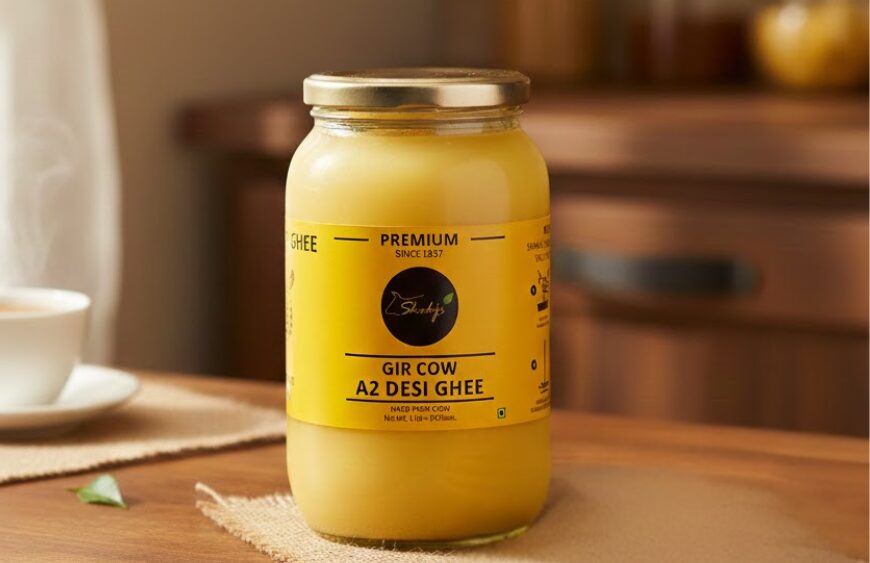
- Shahji A2 Gir Cow Ghee: Traditionally prepared golden ghee with deep aroma and strong stability, suitable for daily storage and regular cooking.
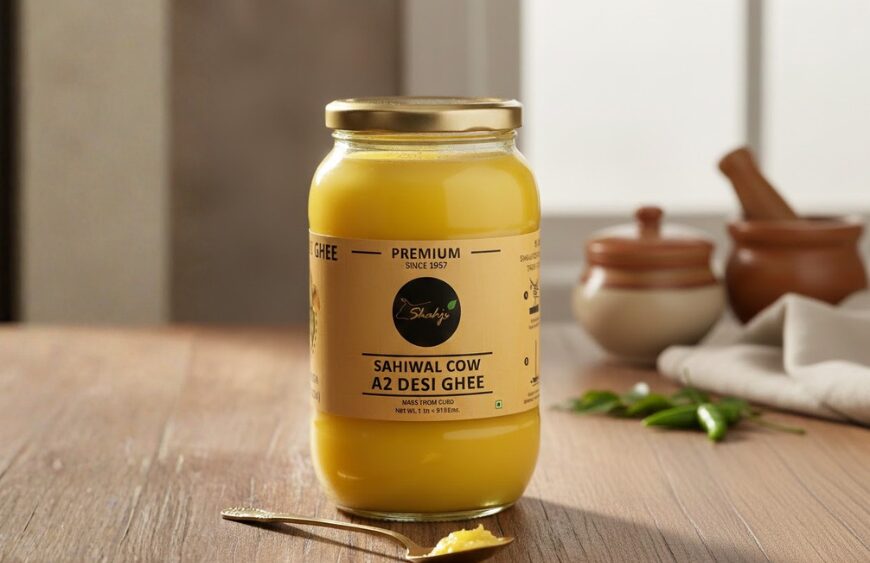
Buy Shahji A2 Gir Cow Ghee - Shahji A2 Sahiwal Cow Ghee: Balanced and smooth ghee with consistent texture, ideal for everyday household use.
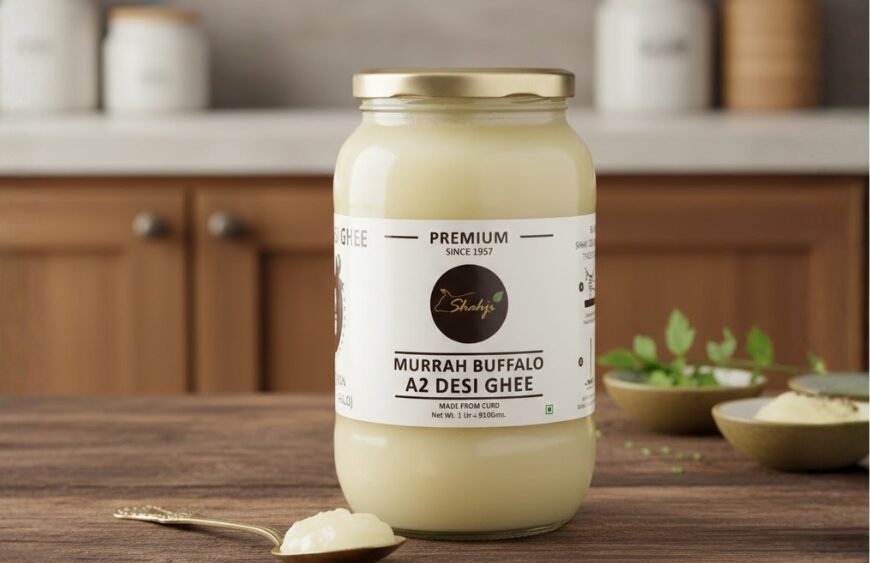
Buy Shahji A2 Sahiwal Cow Ghee - Shahji Murrah Buffalo Ghee: Creamier and denser ghee with thicker texture, well-suited for those who prefer richer cooking applications.
Buy Shahji Murrah Buffalo Ghee
Frequently Asked Questions – FAQs
Can ghee go bad in Indian summer?
Yes, ghee can spoil faster in Indian summers if it is not stored properly. High temperatures, direct sunlight, and moisture in the air can slowly affect the quality of ghee. For example, if the jar is kept near the gas stove or open for long periods, heat and air can change the aroma and taste.
However, ghee is naturally more stable than butter or many cooking oils. If you store it in a tightly closed container, keep it away from sunlight, and always use a dry spoon, it usually stays fresh for several months even in summer.
Why does ghee melt and solidify repeatedly?
Many people notice that their ghee melts during the day and becomes solid again at night. This is completely normal, especially in Indian weather where temperatures change frequently.
Ghee melts when the temperature rises and solidifies again when the environment becomes cooler. This natural change does not damage the ghee or reduce its quality.
In fact, traditionally made ghee often forms small grains after cooling, which is considered as a sign of good preparation.
Is refrigeration compulsory for storing ghee?
No, refrigeration is not necessary for most households.
Ghee has very low moisture content, which helps it stay stable at room temperature for a long time. In many Indian homes, ghee is traditionally stored in the kitchen cupboard and used daily.
How long does homemade ghee last?
Homemade ghee can usually stay fresh for about 6 to 9 months at room temperature if it is prepared and stored properly. The key is removing all moisture during cooking and storing it in a clean, dry container. A glass jar with a tight lid kept in a cool cupboard works well.
Using a dry spoon every time also helps prevent spoilage. If the ghee still smells pleasant and tastes normal, it is generally safe to use.
Can fungus grow in ghee?
Pure ghee normally does not develop fungus because it contains very little moisture. However, fungus can appear if water or steam accidentally enters the container. This can happen if a wet spoon is used or if the jar is left open in a humid kitchen.
To avoid this, always use a dry spoon, close the lid properly, and store the ghee in a cool and dry place. If you ever see fungus or an unusual smell, it is best not to use the ghee.
Further Reading & Scientific References
- Food Safety and Standards Authority of India (FSSAI): https://www.fssai.gov.in
- National Dairy Research Institute (NDRI): https://www.ndri.res.in
- Indian Council of Agricultural Research (ICAR): https://icar.org.in
- Food and Agriculture Organization (FAO): https://www.fao.org
Conclusion
Properly storing ghee is not just a good cooking practice but also helps to protect your health nutritionally.
In Indian weather conditions, climate awareness, what containers you choose to store it in and how you handle the ghee can affect how long or how well ghee will keep:
- Flavor integrity
- Digestive support potential
- Vitamin stability
- Oxidative resistance
When ghee is stored properly, it continues to be one of the most stable traditional cooking fats from India.
A structured storage approach protects both your investment and your health.
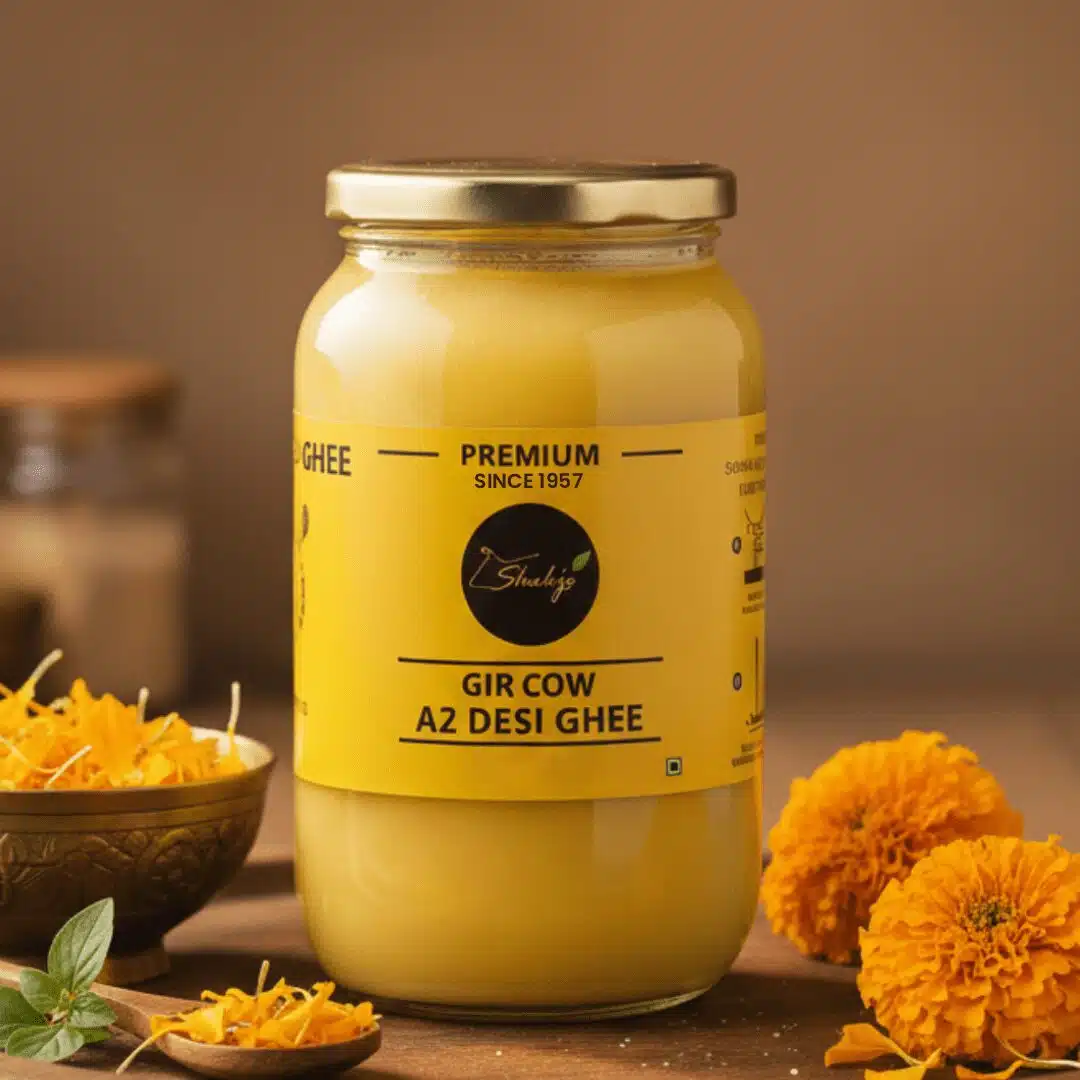
A2 Gir Cow Ghee
1 LTR
Best Price: ₹2125 with Coupons

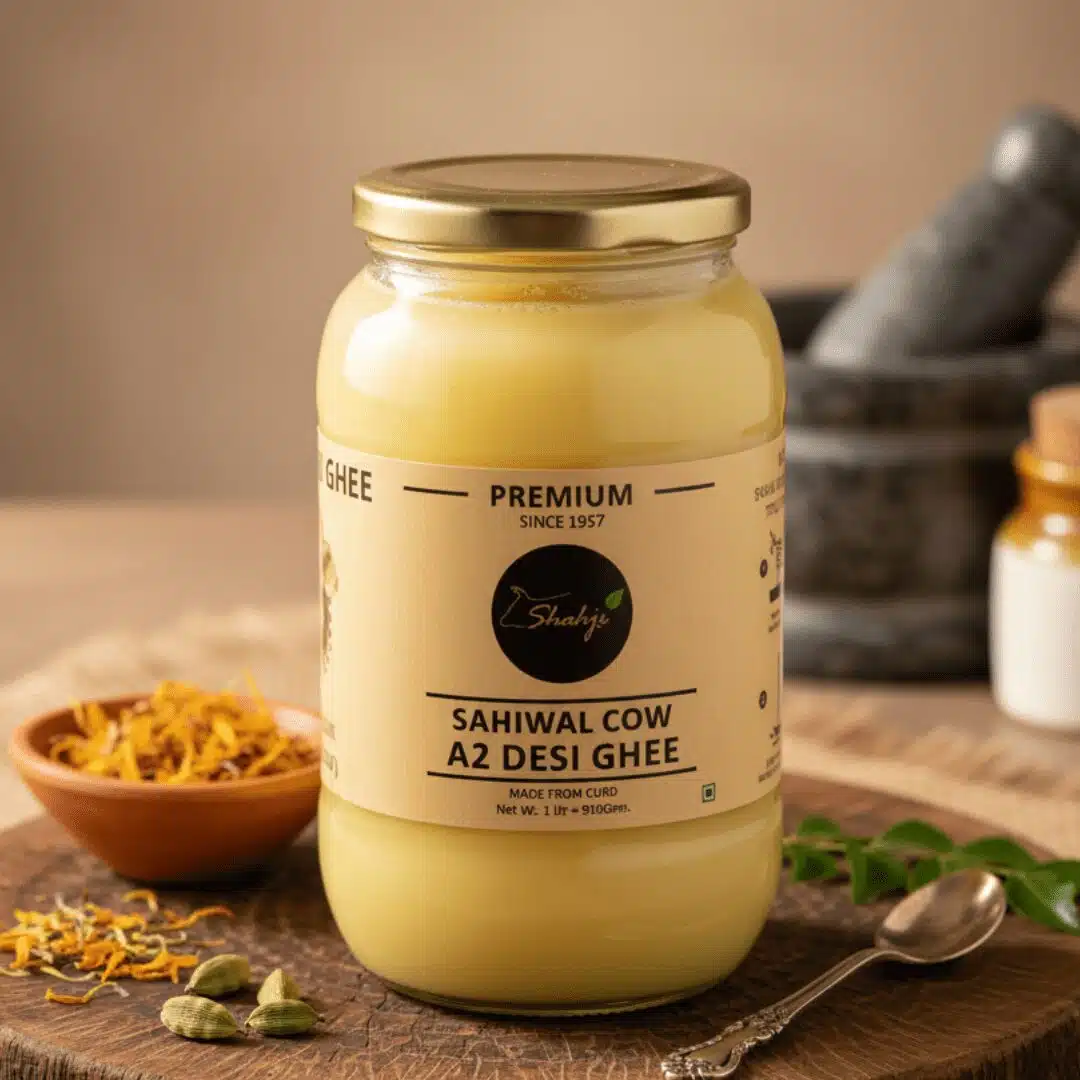
A2 Sahiwal Cow Ghee
1 LTR
Best Price: ₹1619 with Coupons

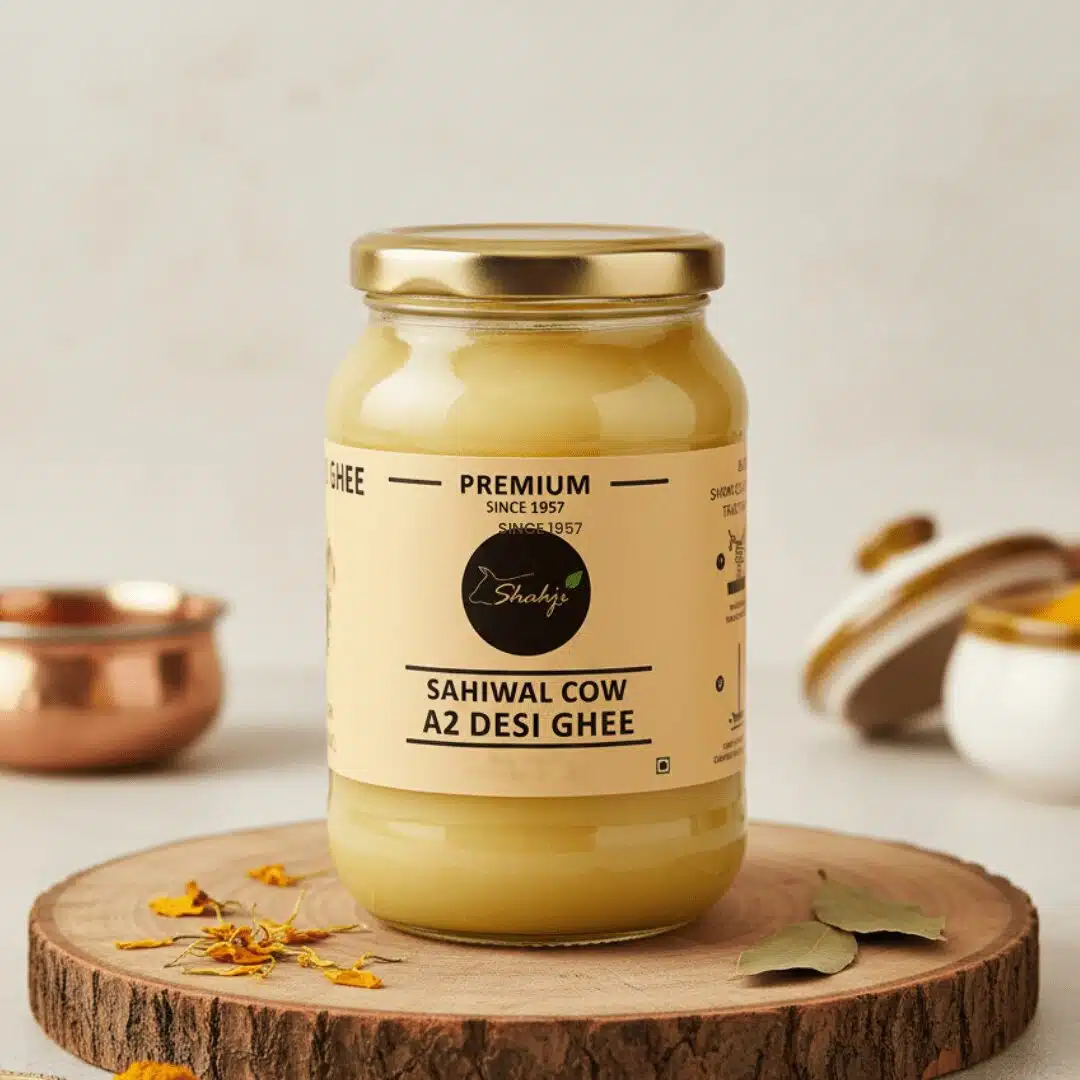
A2 Sahiwal Cow Ghee
500 ML
Best Price: ₹875 with Coupons
Related Articles

Common Types of Ghee Adulteration in India and How to Avoid Them

Anveshan Vs Kapiva Vs Shahji Ghee – Which one is best?

Does Ghee Expire? Shelf Life, Storage and Spoilage Signs

Buy A2 Desi Ghee Online — What You Must Know

Buffalo Ghee Price 1kg: Factors, Benefits & Where to Buy the Best Quality