
Cow Ghee Vs Buffalo Ghee- Which Is Better for Health, Digestion & Weight Loss?

When comparing the Cow ghee vs Buffalo ghee, many people get confuse that which one is healthier, which is easy to digest and which one is better for weight management. Both the ghee are widely used in Indian households, in traditional Ayurvedic practices and in modern nutrition plans, but they are different in texture, composition and metabolic health.
In short, cow Ghee is lighter, easier to digest and generally can be consumed daily whereas buffalo ghee is thicker, more dense and has a higher fat content than the cow ghee.
This comprehensive, research based guide compares both types of ghee based on:
- Nutritional science
- Fatty acid composition
- Digestive impact
- Cholesterol & heart health
- Weight management
- Ayurvedic perspective
- Cooking performance
- Suitability for different age groups
- Milk biochemistry
- Scientific research findings
By the end, you’ll have a clear, evidence-based understanding of which type of ghee suits your needs best.
Cow Ghee vs Buffalo Ghee – Key Differences at a Glance
| Feature | Cow Ghee | Buffalo Ghee |
|---|---|---|
| Color | Golden yellow (due to beta-carotene) | White or pale cream |
| Fat Content | Slightly lower | Higher |
| Texture | Light, smooth | Thick, dense |
| Digestibility | Easier to digest | Heavier to digest |
| Aroma | Mild | Rich & strong |
| Best For | Daily use, children, elderly | Sweets, weight gain, high energy needs |
| Ayurvedic Value | Highly recommended | Considered heavier (Kapha increasing) |
| Calorie Density | High | Slightly higher |
Quick Summary
In the cow ghee vs buffalo ghee comparison the cow ghee is more light and easily digestible, while buffalo ghee is more nourishing and calories rich. Cow ghee is generally preferred for daily consumption and for Ayurvedic usage, while buffalo ghee is great for high energy diets and rich culinary recipes.
Understanding the Core Difference: Milk Source Matters
The main difference between the Cow ghee vs Buffalo ghee comparison starts with the structure of the milk. Since ghee is prepared by clarifying butter derived from milk fat. The nutritional and structural characteristics of milk directly influence the final product.
Fat Percentage in Milk:
| Milk Type | Average Fat Content |
|---|---|
| Cow Milk | 3–5% |
| Buffalo Milk | 6–8% |
Buffalo milk contains more fat than cow milk. This higher fat concentration results in:
- Higher ghee yield per liter
- Thicker consistency
- Higher density
- Slightly increased calories
Higher fat doesn’t necessarily mean healthier or unhealthier it just affects the texture, digestion and energy density.
Milk Biochemistry Differences
Beyond fat content, milk from cow and buffalo differs in its biochemical structure:
- Buffalo milk has larger fat globules
- Cow milk has smaller fat globules which are more evenly distributed
- Buffalo milk has higher total solids
- Cow milk contains more beta-carotene
Size of the fat globules affects how easily digestive enzymes break down fats. Smaller fat globules in cow milk allow better emulsification and faster enzyme action, which can help in easier digestion.
Ghee Yield & Density
Because the buffalo milk contains more fat and total solids it produces more ghee per liter than the cow milk. This makes the buffalo ghee:
- Thicker
- More concentrated
- slightly heavier than the buffalo ghee
Therefore, cow ghee is lighter in texture and spreads more smoothly, which makes it a better choice for daily consumption.
Why Is Cow Ghee Yellow and Buffalo Ghee White?
When people compare jars, the first thing they notice is the color.
- Cow ghee – Golden yellow
- Buffalo ghee – Creamy white to pale off-white
This difference is not artificial, not processing-based, and not quality-related. It is biochemical.
The Science Behind the Yellow Color in Cow Ghee
The color of the cow ghee comes from the beta-carotene that is a natural plant pigment.
What Happens Biologically?
- Cows consume green fodder that is rich in carotenoids.
- Their digestive metabolism converts some carotene into Vitamin A.
- A portion of beta-carotene remains unconverted.
- This fat-soluble pigment get absorbed in milk fat.
- The pigment concentrates further during the bilona or traditional ghee preparation.
This results in Golden Yellow Ghee
This is especially visible in A2 indigenous breeds like Gir and Sahiwal cows.
Beta-Carotene: What It Does for the Body
Beta-carotene is a vitamin A compound.
Documented Biological Roles:
- Antioxidant protection
- Immune system support
- Eye health maintenance
- Skin health support
- Mechanisms for cell repair
Because it is fat-soluble Ghee can be used as a carrier to absorb nutrients. This provides cow ghee with a slight antioxidant benefit over buffalo ghee carotenoid content.
Does More Yellow Mean Better Quality?
This is why clarity is important.
Color depends on:
- Breed
- Feed quality
- Seasonal grassing
- Processing method
The cows that are fed heavily with grass produce deeper yellow Ghee. Stall fed cows may produce lighter ghee.
Seasonal Color Variation: A Natural Indicator
During winter and monsoon grazing:
- Fodder is more green.
- The levels of carotenoid increase.
- Ghee turns more rich and yellow.
In dry Season:
- The yellow shade can be reduced in a small amount.
This natural variation is actually a sign of minimal processing.
Does Buffalo Ghee Lack Nutrition Because It Is White?
No, buffalo Ghee is made up of:
- Higher fat percentage
- More saturated fat
- Richer mouthfeel
It’s just that it doesn’t have visible carotene pigment. Both are nutritiously beneficial However, their composition is different little.
Which Is Better for Skin Glow and Radiance?
Traditional Ayurveda Associates:
- Golden cow ghee: Tejas (radiance)
- Buffalo Ghee: Strength and heaviness
From a modern perspective:
- Beta-carotene’s antioxidant can support the skin health.
However, overall quality of diet is more important than the color of ghee.
Nutritional Comparison: Cow Ghee vs Buffalo Ghee (Per 100g)
When comparing Cow ghee vs Buffalo ghee nutritionally both are almost 99–100% pure milk fat. But a subtle differences in micronutrients and fatty acid composition may influence digestion and metabolism.
| Nutrient | Cow Ghee | Buffalo Ghee |
|---|---|---|
| Calories | 890–900 kcal | 870–890 kcal |
| Total Fat | 99g | 99g |
| Saturated Fat | ~60–65g | Slightly higher |
| Vitamin A | Higher | Moderate |
| Beta-Carotene | Present | Minimal |
| CLA (Conjugated Linoleic Acid) | Present | Present |
| Butyric Acid | Present | Present |
| Cholesterol | 250–300mg | Slightly lower range |
The calorie difference between cow ghee and buffalo ghee is minimal. Therefore calorie count alone should not be the deciding factor when choosing between them.
Fatty Acid Composition & Metabolic Impact
Butyric acid is a short-chain fatty acid that:
- Short-chain fat acids (SCFA)
- Medium-chain fat acids (MCFA)
- Long-chain saturated fats
- Conjugated Linoleic Acid (CLA)
Butyric Acid: Why It Matters
Butyric acid is a short-chain fatty acid that:
- Nourishes colon cells
- Supports gut lining integrity
- May help reduce intestinal inflammation
- Improves the microbiome balance
Studies that was published in Nutrients (2018) highlights the importance of butyrate in promoting gut health and regulation of the immune system.
Cow ghee could provide slightly higher bioavailability because of its smaller fat globules which could improve fat digestion and absorption capacity.
Digestibility: Scientific Perspective
Digestibility is one of the most important concerns in the Cow ghee vs Buffalo ghee comparison.
Fat Globule Size Difference:
- Buffalo milk – Larger fat globules
- Cow milk – Smaller fat globules
Larger fat globules:
- Needs more enzymatic action
- Digest slower
- May feel heavy for some individuals
Smaller fat globules:
- Emulsify more efficiently
- Break down faster
- Feel lighter on the stomach
Traditional and clinical observations indicate that cow ghee is generally more digestible particularly for:
- Senior citizens
- Children
- People who have weaker digestion
This is in line with Ayurvedic classifications, in which the cow’s ghee is regarded as “Laghu” (light) and buffalo ghee is regarded as heavier.
Buffalo Ghee vs Cow Ghee for Weight Loss
Modern research has shown some fatty acids present in Ghee, specifically CLA can influence fat metabolism.
An article published in American Journal of Clinical Nutrition shows that CLA can help in supporting fat oxidation and enhance the body’s structure when used in moderate amounts.
Cow Ghee & Weight Loss
- Easier digestion
- Improved satiety control
- Helps maintain metabolic flexibility
- Can reduce overeating
Buffalo Ghee & Weight Gain
- Higher fat density
- Sustained energy release
- Ideal for athletes and those who require high calories intake
But, it is important to know:
Weight loss depends on your total calorie balance not just the kind of Ghee.
A daily intake of 1-2 teaspoons is considered to be moderate.
Cholesterol & Heart Health: What Does Research Say?
Ghee is a source of saturated fats, which have historically been linked to increased LDL cholesterol.
However, modern research provides nuance.
An article published in Indian Journal of Medical Research discovered that moderate consumption of ghee didn’t significantly increase the risk of cardiovascular disease for healthy individuals.
Additionally:
- Short-chain fatty acids behave differently than the long-chain saturated fats.
- The overall pattern of a diet is more important than the single ingredient.
- In excess, any saturated fat may raise cholesterol levels. Moderation remains essential.
Glycemic Control & Diabetes
Ghee has no carbohydrates and has a zero Glycemic Index.
When added to meals, healthy fats can:
- Slow absorption of glucose
- Improve satiety
- Reduce post-meal glucose spikes
There is no strong evidence that one type significantly outperforms the other for blood sugar control.
Digestibility differences may influence individual comfort, but metabolically they behave similarly.
Ayurveda Perspective: Why Cow Ghee Is Considered Superior
Ayurveda describes cow ghee as:
- Ojas-building (vitality enhancing)
- Medhya (supports the intellect)
- Rasayana (rejuvenative)
Cow ghee is used in:
- Panchakarma detoxification
- Nasya therapy
- Herbal detox
- Rituals of religion
Buffalo ghee is considered heavier and more Kapha-increasing.
Traditional Ayurvedic texts like Charaka Samhita emphasize cow ghee for therapeutic use.
So, from a traditional point of view of health it is believed that cow ghee has a greater significance.
Cooking Stability & Smoke Point
Both buffalo and cow Ghee have high smoke points (~250degC), which makes it superior form many other refined oils.
Because of its high smoke point it can be used in:
- Frying
- Roasting
- Tempering (tadka)
- Baking
Since ghee is clarified it does not contain milk solids that are burned easily.
Buffalo ghee produces slightly richer aroma due to denser fat structure.
For cooking in the everyday both are equally good in terms of stability.
Texture & Sensory Characteristics
Cow Ghee has:
- Mild aroma
- Light mouthfeel
- Smooth texture
Buffalo Ghee has:
- Stronger aroma
- Richer taste
- Thicker consistency
Sensory preference is subjective.
Sweet dishes typically prepared with buffalo ghee has denser texture.
Impact on Children & Elderly
Children require:
- Essential fats for brain development
- Fat-soluble vitamin absorption
- Balanced digestion
Cow ghee is mostly recommended because it is easier to digest.
For older people with reduced digestive enzyme activity, Cow ghee will be more gentler for their body.
Buffalo Ghee is more suitable for those who are physically active and require higher calorie intake.
Shelf Life & Oxidative Stability
Because of its saturated fat content, ghee is quite resistant to the oxidation process. Buffalo Ghee might oxidize slower because of the lower levels of carotene, but the difference is minor.
The proper storage is more important than the type of ghee:
- Store it in cool and dry place
- Store the ghee in airtight container
- Avoid moisture contamination
Common Myths Debunked
Myth 1:
- Myth: Buffalo ghee is unhealthy.
- Fact: It’s calorie dense, but it’s healthy when used in moderate amounts.
Myth 2:
- Myth: Cow ghee is low in calories.
- Fact: The difference is minor.
Myth 3:
- Myth: Ghee causes heart disease.
- Fact: Excessive saturated fat intake may increase risk, but when consumed in moderation it is generally safe.
How to Choose Based on Your Health Goal
Choose Cow Ghee If:
- You have sensitive digestion
- You would prefer Ayurvedic benefits
- You are using ghee for children or elderly people
- You want lighter texture
- You consume ghee daily
Choose Buffalo Ghee If:
- You like a rich and creamy flavor
- You need calorie-dense energy
- You make sweets often
- You are trying to gain weight
Explore Traditionally Prepared Cow & Buffalo Ghee
Understanding the difference between cow ghee and buffalo ghee can help you choose the right type for your cooking, digestion, and nutritional needs. However, the quality of ghee depends not only on the milk source but also on how it is prepared.
Traditional bilona ghee preparation, where butter is churned from the curd and then slowly heated. This method is widely known as the most authentic method. This slow process helps preserve the natural aroma, grainy texture, and beneficial fatty acids found in high-quality ghee.
If you are exploring traditionally prepared ghee made from indigenous dairy breeds you can learn more about different varieties below:
- Gir Cow A2 Ghee: Prepared from milk of Gir cows using traditional bilona method, known for its golden color and light digestibility.

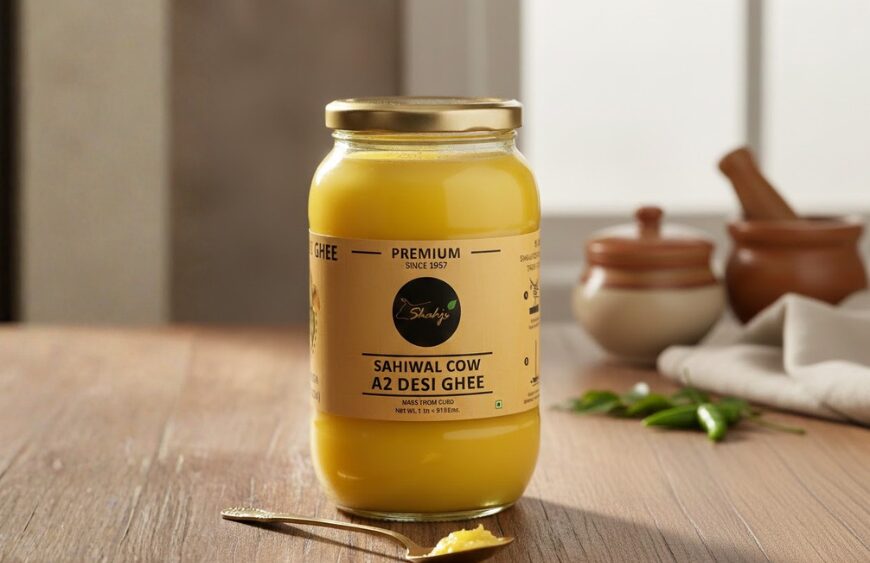
- Sahiwal Cow A2 Ghee: Made from Sahiwal cow milk, valued for its smooth texture and balanced aroma.
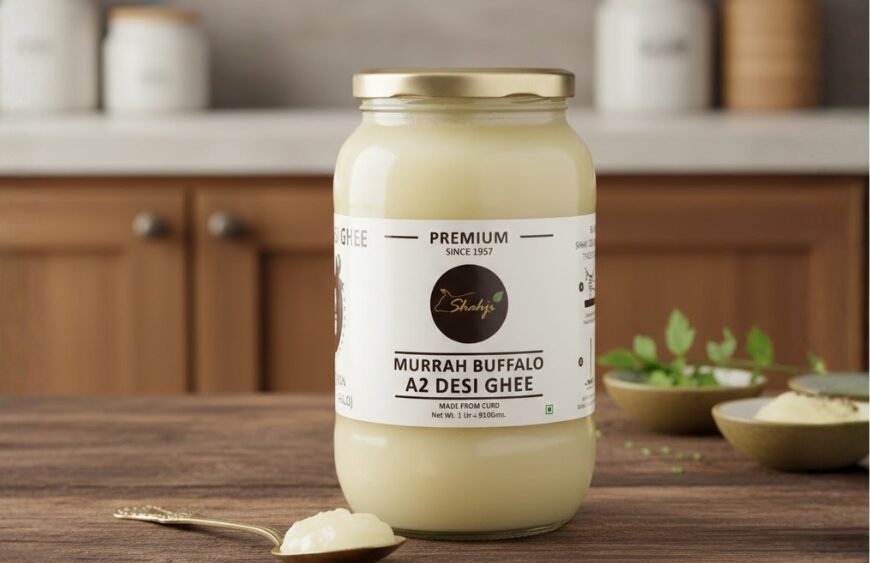
- Murrah Buffalo Ghee: Rich, dense, and ideal for sweets, traditional cooking, and high-energy diets.

The Bigger Picture: Quality Over Type
Regardless of the type, quality matters more than cow vs buffalo.
Choose the ghee that is:
- Made from the high quality milk
- Traditionally prepared
- Free from additives
- Lab tested for purity
- Slowly Cooked
Industrial ghee with artificial flavouring can reduce nutritional value.
Final Verdict: Cow Ghee vs Buffalo Ghee
Both Cow ghee and Buffalo ghee provides:
- Healthy fats
- Cultural significance
- Fat soluble vitamins
- Cooking stability
But when you consider:
- Digestibility
- Suitability for all age groups
- Ayurvedic importance
Cow ghee has a little more overall advantage
Buffalo ghee is an excellent choice for:
- Rich culinary applications
- Energy dense diets
- Flavour focused cooking
The best approach for health is:
- Choose high quality ghee
- Consume in moderation
- Combine it with healthy balanced diet
- Maintain active lifestyle
Scientific References (For Authority & EEAT)
- Nutrients (2018): Role of Butyrate in Gut Health
https://www.mdpi.com/2072-6643/10/9/1175 - Indian Journal of Medical Research: Effects of Ghee on Lipid Profile
https://www.ncbi.nlm.nih.gov/pmc/articles/PMC3215354/ - Charaka Samhita: Ayurvedic Classification of Ghee
https://www.wisdomlib.org/hinduism/book/charaka-samhita-english
Related Articles

Sahiwal Cow: Milk Profile, Ghee Characteristics and Native Regions

Best Ghee in Chennai – Top 10 Pure A2 Ghee Brands

Best A2 Ghee in Maharashtra: Top Brands & Benefits

Best Ghee in Odisha – Top 13 A2 Ghee Brands

15 Best Ghee in Chhattisgarh – Shahji Ghee