What is the Bilona Method? Traditional Bilona Ghee Process Explained

Last Updated: May 2026
The traditional Bilona method is one of India’s oldest and most respected techniques for preparing ghee. Unlike modern industrial methods that rely on cream separators and rapid machine processing, the Bilona method follows a slow curd-churning process that preserves the natural aroma, texture, and authenticity of ghee.
Today, as more families become conscious about food quality, digestion, traditional preparation methods, and indigenous dairy practices, Bilona ghee has regained massive popularity across India.
Many people now prefer Bilona ghee because it is commonly associated with:
- traditional Ayurvedic preparation
- curd-churned ghee making
- indigenous cow breeds
- richer aroma and grainy texture
- less processed dairy practices
- A2 desi cow milk sourcing
In this detailed guide, you will learn:
- what the Bilona method actually is
- how Bilona ghee is prepared step-by-step
- why Bilona ghee is different from regular ghee
- Bilona ghee benefits
- why Bilona ghee is expensive
- Bilona vs industrial ghee comparison
- A2 Bilona ghee advantages
- how to choose high-quality Bilona ghee
Quick Answer – What is Bilona Ghee?
Bilona ghee is traditional Indian ghee prepared using a curd-churning method instead of direct cream separation. In the Bilona process, milk is first converted into curd, the curd is hand-churned using a wooden Bilona to extract butter, and the butter is then slowly heated into ghee. This traditional process is known for producing ghee with a rich aroma, grainy texture, and authentic flavor.
What is the Bilona Method?
The Bilona method is a traditional Vedic process of making ghee from curd rather than directly from cream.
The word “Bilona” refers to the traditional wooden churner used to churn curd into butter.
In this process:
- Fresh milk is boiled
- Milk is converted into curd
- Curd is hand-churned using a wooden Bilona
- Butter (makhan) is separated
- Butter is slowly heated into ghee
This slow preparation method is what gives traditional Bilona ghee its:
- rich aroma
- grainy texture
- deep flavor
- traditional authenticity
Unlike commercial cream-based ghee production, the Bilona process is slower, more labor-intensive, and closely connected with traditional Indian dairy practices.
Bilona Ghee’s 3000-Year Traditional Heritage
The Bilona method has deep roots in ancient Indian dairy traditions and has been practiced in households across India for generations. Traditional Ayurvedic texts and Vedic food practices have long emphasized curd-churned ghee prepared using slow handcrafted methods rather than rapid industrial processing.
The word “Bilona” itself comes from the traditional wooden churner used to separate butter from curd through slow clockwise and anti-clockwise churning. Historically, this process was commonly performed in Indian homes using earthen pots, wooden churners, and naturally fermented curd.
For centuries, traditionally prepared Bilona ghee has remained closely associated with:
- Ayurveda-inspired food practices
- traditional Indian cooking
- temple offerings
- slow food preparation
- handcrafted dairy traditions
Even today, many families continue preferring Bilona ghee because it represents authenticity, heritage, and traditional preparation methods that have been followed for generations.
Bilona Ghee vs Regular Ghee – Quick Comparison
| Feature | Bilona Ghee | Regular Industrial Ghee |
|---|---|---|
| Preparation Base | Curd-churned butter | Cream or direct fat separation |
| Process | Slow traditional method | Rapid industrial production |
| Churning | Wooden Bilona churning | Machine processing |
| Aroma | Rich and nutty | Mild |
| Texture | Grainy | Smooth |
| Authenticity | Traditional | Commercial |
| Ayurveda Preference | Highly preferred | Less emphasized |
| Processing Level | Minimal | Heavily processed |
| Milk Source | Often indigenous cows | Mixed dairy sourcing |
Why Many Families Prefer Bilona Ghee
The growing popularity of Bilona ghee is linked with increasing awareness around:
- traditional food preparation
- clean ingredient preference
- indigenous Indian cow breeds
- Ayurveda-inspired lifestyles
- digestive comfort
- minimally processed foods
Many households today are shifting toward traditionally prepared Bilona ghee because they value:
- authenticity
- sourcing transparency
- natural preparation
- richer taste and aroma
- curd-based preparation methods
The revival of Bilona ghee is also strongly connected with the growing interest in A2 dairy products and traditional Indian wellness practices.
What Makes Bilona Ghee Different?
The biggest difference lies in the preparation method.
Commercial ghee is often made quickly from cream using industrial processing methods.
Traditional Bilona ghee, however, follows a much slower curd-based preparation process.
This traditional approach is believed to preserve:
- natural aroma
- authentic flavor
- grainy texture
- nutritional integrity
- traditional characteristics of ghee
Many Ayurveda-focused households prefer Bilona ghee specifically because it follows this ancient preparation process.
Step-by-Step Bilona Method Process
Step 1: Boiling Fresh Milk
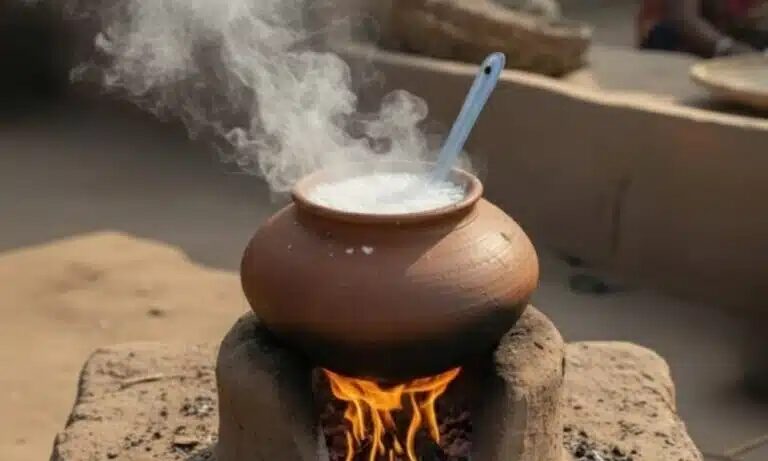
Fresh milk is first boiled carefully to remove impurities and prepare it for curd formation.
Traditionally, premium Bilona ghee is prepared using milk from indigenous Indian breeds such as Gir cows, Sahiwal cows and Murrah buffaloes. These breeds are traditionally valued for their rich milk quality and strong association with authentic Indian dairy practices.
Step 2: Converting Milk Into Curd
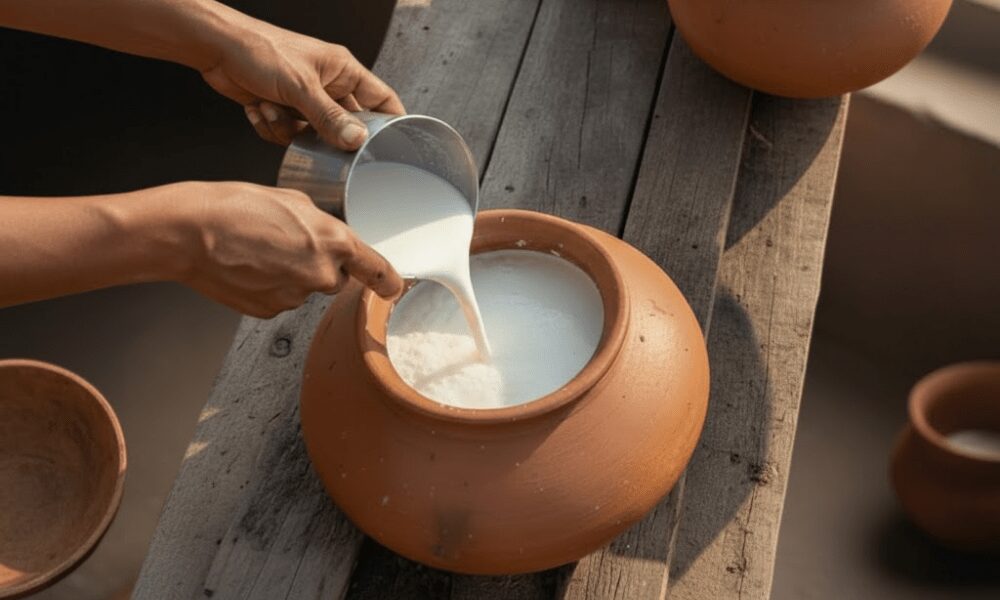
Once the milk cools to the right temperature, a natural curd starter culture is added.
The milk is left overnight to naturally convert into curd.
This curd-based process is one of the biggest differences between Bilona ghee and regular commercial ghee.
Step 3: Hand-Churning the Curd

The curd is churned using a traditional wooden Bilona.
This slow clockwise and anti-clockwise churning separates butter (makhan) from buttermilk.
Traditionally, this process was done manually and required significant effort and patience.
Why the Bilona Churning Process Matters
The traditional wooden churning process is considered important because it:
- preserves traditional preparation authenticity
- creates rich natural aroma
- develops grainy texture
- follows Ayurvedic preparation principles
- avoids aggressive industrial processing
This is one reason traditionally prepared Bilona ghee is often considered premium compared to regular commercial ghee.
Step 4: Separating Butter from Buttermilk

After churning:
- butter rises to the surface
- buttermilk separates naturally
The butter is collected carefully for the final stage of ghee preparation.
Step 5: Slow Heating the Butter

The extracted butter is heated slowly over a low flame.
As the butter cooks:
moisture evaporates
milk solids separate
golden aromatic ghee forms
This slow cooking process is essential for developing Bilona ghee’s:
- nutty aroma
- rich flavor
- golden appearance
- grainy texture
Why Slow Heating is Important
Traditional Bilona preparation emphasizes slow heating because overheating can alter:
- aroma
- flavor
- texture
- overall authenticity
Ayurvedic cooking practices also traditionally recommend slower cooking methods.
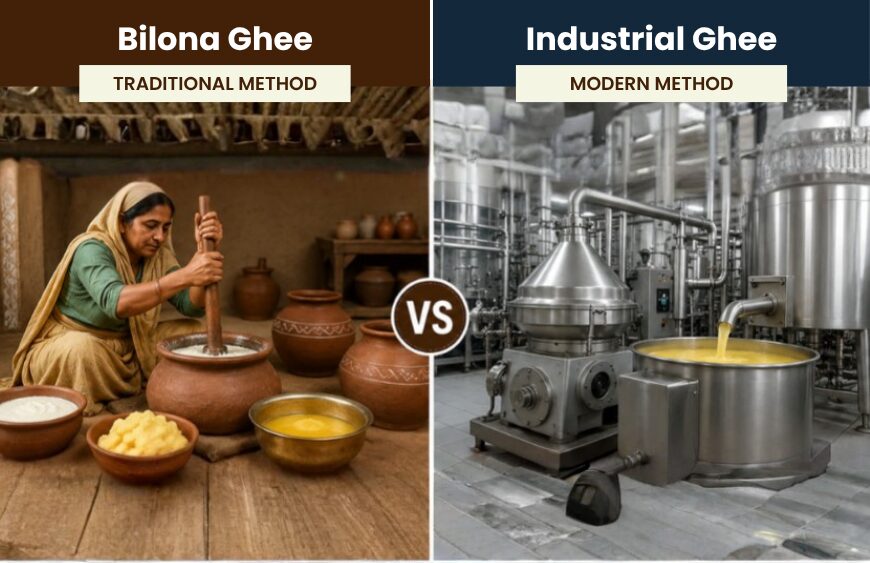
Bilona Ghee vs Industrial Ghee Preparation
| Traditional Bilona Ghee | Industrial Ghee |
|---|---|
| Curd-based preparation | Cream-based production |
| Slow traditional process | Fast commercial processing |
| Hand-churned butter | Machine separated fat |
| Rich aroma | Mild aroma |
| Grainy texture | Smooth uniform texture |
| Traditionally valued | Mass-market production |
| Minimal processing | Industrial processing |
Why Bilona Ghee is Expensive?
Many people wonder why traditionally prepared Bilona ghee costs significantly more than regular commercial ghee.
The answer mainly comes down to two important factors:
1. Large Quantity of Milk Required
Traditional Bilona ghee production is extremely milk-intensive.
Depending on the breed and preparation method, approximately 25–30 litres of milk may be required to prepare just 1 litre of Bilona ghee.
Indigenous breeds like Gir cows and Sahiwal cows naturally produce lower milk quantities compared to hybrid commercial dairy breeds, which further increases production cost.
2. Low and Labor Intensive Preparation
Unlike industrial cream-based production, the Bilona method involves multiple traditional steps including:
- boiling milk
- curd formation
- overnight fermentation
- hand-churning using wooden Bilona
- butter extraction
- slow heating over low flame
This entire process takes considerably more time, effort, and manual involvement compared to rapid commercial ghee manufacturing.
Because of this, traditionally prepared Bilona ghee is often positioned as a premium dairy product.
Typical Bilona Ghee Price Range in India (2026)
| Type | Approximate Price Range |
|---|---|
| Regular industrial ghee | ₹500–800/litre |
| Buffalo bilona ghee | ₹1,000–1,700/litre |
| A2 Bilona ghee from indigenous cows | ₹2,000–3,000/litre |
Prices may vary depending on:
- milk quality
- indigenous breed
- sourcing traditional preparation methods
- batch size
- feeding practices
- production scale
Growing Demand for Traditional Bilona Ghee
India’s ghee market was valued at approximately ₹2,374 billion in 2020, reflecting the strong and growing demand for traditional dairy products across the country.
In recent years, consumer interest in:
- traditional food preparation
- indigenous cow breeds
- minimally processed dairy
- Ayurveda-inspired lifestyles
- premium handcrafted foods
has significantly increased the popularity of traditionally prepared Bilona ghee in India.
Why A2 Bilona Ghee is Becoming Popular
A2 Bilona ghee combines two growing consumer preferences:
- traditional Bilona preparation
- A2 indigenous cow milk sourcing
Many families today prefer A2 Bilona ghee because it is commonly associated with:
- indigenous cow breeds
- traditional preparation methods
- easier digestion for some individuals
- Ayurveda-focused lifestyles
- minimally processed dairy practices
Popular indigenous breeds associated with A2 milk include:
- Gir Cows
- Sahiwal Cows
- Red Sindhi Cows
- Murrah Buffaloes
5 Reasons Many Families Prefer A2 Bilona Ghee
1. Traditional Curd-Churned Preparation
Unlike commercial cream-based ghee production, A2 Bilona ghee is traditionally prepared by converting milk into curd first and then hand-churning the curd to extract butter.
Many families prefer this slower traditional preparation method because it is closely connected with authentic Indian dairy practices.
2. Indigenous Indian Breed Sourcing
Premium A2 Bilona ghee is commonly prepared using milk from indigenous Indian breeds such as:
- Gir cows
- Sahiwal cows
- Red Sindhi cows
- Kankrej cows
- Murrah buffaloes
These breeds are highly valued in traditional Indian dairy farming practices.
3. Rich Aroma and Grainy Texture
Traditionally prepared Bilona ghee is widely known for its:
- deep nutty aroma
- authentic desi flavor
- grainy texture
- rich appearance
The slow preparation process and low-flame heating help preserve these traditional characteristics.
4. Minimal Processing Approach
Many consumers today prefer foods that are traditionally prepared and minimally processed.
Bilona ghee is commonly associated with:
- slow handcrafted preparation
- curd-based processing
- traditional dairy techniques
- small-batch production methods
This is one reason why Bilona ghee is often viewed as a premium alternative to industrially processed ghee.
5. Strong Connection with Ayurveda and Traditional Diets
Bilona ghee has been used in traditional Indian households and Ayurveda-inspired lifestyles for generations.
It is commonly included in:
- traditional Indian meals
- Panchakarma practices
- Ayurvedic routines
- daily nourishment-focused diets
This strong cultural and traditional connection continues to influence consumer preference today.
4. Minimal Processing Approach
Many consumers today prefer foods that are traditionally prepared and minimally processed.
Bilona ghee is commonly associated with:
- slow handcrafted preparation
- curd-based processing
- traditional dairy techniques
- small-batch production methods
This is one reason why Bilona ghee is often viewed as a premium alternative to industrially processed ghee.
5. Strong Connection with Ayurveda and Traditional Diets
Bilona ghee has been used in traditional Indian households and Ayurveda-inspired lifestyles for generations.
It is commonly included in:
- traditional Indian meals
- Panchakarma practices
- Ayurvedic routines
- daily nourishment-focused diets
This strong cultural and traditional connection continues to influence consumer preference today.
Nutritional Profile of Bilona Ghee
Traditionally prepared Bilona ghee naturally contains:
- fat-soluble vitamins
- healthy fatty acids
- butyric acid CLA (Conjugated Linoleic Acid)
Many people believe the real difference lies in:
- preparation quality
- milk sourcing
- traditional methods
- digestibility authenticity
rather than drastic nutritional differences alone.
Health Benefits of Bilona Ghee
1. Rich in Natural Vitamins & Antioxidants
Traditionally prepared Bilona ghee naturally contains fat-soluble vitamins like Vitamin A, Vitamin D, Vitamin E, and Vitamin K. It also contains antioxidants and butyric acid, which are commonly associated with overall wellness and nourishment.
2. Contains Healthy Fatty Acids
Bilona ghee contains beneficial fatty acids such as:
- Omega-3 fatty acids
- Omega-6 fatty acids
- CLA (Conjugated Linoleic Acid)
- Butyric acid
These healthy fats are commonly valued in traditional diets.
3. Traditionally Associated with Better Digestive Comfort
Many people report that traditionally prepared Bilona ghee feels lighter and easier to digest compared to heavily processed commercial ghee.
Because Bilona ghee is prepared from curd-churned butter, it is commonly preferred in traditional Indian households for daily consumption.
4. Commonly Used for Gut and Digestive Support
Bilona ghee naturally contains butyric acid, which is widely discussed in relation to gut health and digestive wellness.
Many families traditionally consume ghee as part of balanced meals to support comfortable digestion.
5. Traditionally Valued in Ayurveda
Bilona ghee has been used for centuries in Ayurveda and traditional wellness practices.
It is commonly associated with:
- Panchakarma therapies
- Ayurvedic formulations
- daily nourishment
- rejuvenation practices
- balancing traditional Ayurvedic diets
6. Associated with Traditional Immunity Support
In traditional Indian diets, Bilona ghee has long been considered a nourishing food commonly consumed to support overall strength and wellness.
Its nutrient-rich composition makes it popular in many Ayurveda-focused lifestyles.
7. Support Traditional Cooking Practices
Bilona ghee is widely used for:
- tadka
- sautéing
- roasting
- Indian cooking
- slow cooking recipes
because of its naturally stable cooking properties and high smoke point.
8. Rich Aroma, Grainy Texture and Authentic Taste
One of the biggest reasons people prefer Bilona ghee is its:
- deep nutty aroma
- authentic desi flavor
- grainy texture
- traditional taste
Slow preparation over low flame helps preserve its natural richness.
9. Traditionally Preferred for Growing Children
Many traditional Indian households include Bilona ghee in children’s diets because healthy fats are commonly associated with nourishment and growth.
Cow ghee is especially valued in traditional diets for regular family consumption.
10. Commonly Included in Balanced Weight Management Diets
Bilona ghee is often included in balanced diets because healthy fats can help improve satiety and meal satisfaction when consumed in moderation.
Many modern diets today include controlled portions of traditional ghee.
11. Traditionally Associated with Heart Healthy Fats
Grass-fed Bilona ghee naturally contains CLA and other fatty acids that are commonly discussed in relation to balanced nutrition.
Moderate consumption within a healthy diet is generally emphasized.
12. Traditionally Used for Skin and Hair Nourishment
Bilona ghee has long been used in traditional home remedies for:
- dry skin
- roughness
- hair nourishment
- massage practices
Its natural fat content makes it popular in traditional beauty routines.
13. Commonly Associated with Reduced Processing
Traditional Bilona preparation involves slow heating and curd-churning methods rather than rapid industrial processing.
Many families prefer Bilona ghee because it is perceived as more natural and minimally processed.
14. Popular Among Ayurveda Focused and Natural Lifestyle Consumers
Bilona ghee is widely preferred by people who:
- follow Ayurvedic lifestyles
- prefer traditional foods
- choose minimally processed dairy
- value indigenous Indian food practices
15. Traditionally Prepared from Indigenous Cow and Buffalo Breeds
A2 Bilona ghee prepared from indigenous breeds like:
- Gir Cows
- Sahiwal Cows
- Red Sindhi Cows
- Murrah Buffaloes
is highly preferred among consumers seeking traditionally sourced dairy products.
16. Suitable for Many Lactose Friendly Individuals
Since properly prepared ghee contains very low milk solids, some lactose-sensitive individuals may tolerate Bilona ghee better than many other dairy products.
Individual tolerance may vary.
17. Traditionally Associated with Tooth and Bone Health
Bilona ghee naturally contains fat-soluble vitamins that are commonly associated with calcium absorption and traditional nourishment practices.
Ghee has long been included in balanced Indian diets for overall wellness.
18. Commonly Preferred for Active Lifestyle
Buffalo Bilona ghee is often preferred by individuals seeking richer and denser traditional dairy fats for physically demanding lifestyles and high-calorie diets.
19. Traditionally Associated with Better Cooking Stability
Bilona ghee has a naturally high smoke point, making it commonly preferred over many refined oils for high-temperature cooking applications.
20. Valued for Traditional Nourishment and Daily use
For generations, Bilona ghee has remained an important part of Indian kitchens because of its:
- traditional preparation
- rich taste
- cultural significance
- daily nourishment value
Many families today continue choosing Bilona ghee as part of traditional eating habits and wholesome cooking practices.
Bilona Ghee and Ayurveda
Ayurveda places special importance on traditionally prepared ghee made from indigenous cow milk.
Bilona ghee is commonly associated with:
- nourishment
- rejuvenation
- digestive balance
- wellness routines
This deep traditional connection is one reason many Ayurveda-focused families prefer Bilona ghee over heavily processed alternatives.
Why Many Families are Switching to A2 Ghee
In recent years, many consumers have started moving back toward traditional dairy products.
This shift is driven by growing awareness around:
- traditional sourcing
- indigenous cow breeds
- curd-churned preparation
- cleaner ingredient preference
- minimal processing
- Ayurveda-inspired lifestyles
- digestive comfort trends
Many families today view traditionally prepared Bilona ghee as a more authentic and premium dairy choice compared to industrially processed alternatives.
How to Choose High Quality Bilona Ghee
When buying Bilona ghee, look for products that are:
- traditionally prepared
- curd-churned
- transparent about sourcing
- free from additives
- lab-tested for purity
High Quality Bilona Ghee is usually known for:
- grainy texture
- rich aroma
- golden appearance
- authentic flavor
Consumer should also look look for brands that clearly mentions:
- milk sourcing transparency
- indigenous cow breeds
- used curd-churned preparation
- traditional Bilona process
- purity testing standards
High quality Bilona ghee brands often specify whether the ghee is prepared from Gir cows, Sahiwal cows or Murrah buffalo milk, helping consumers better understand sourcing authenticity and product quality.
Explore Traditionally Prepared Bilona Ghee
If you are exploring premium traditionally prepared ghee varieties, you can explore:
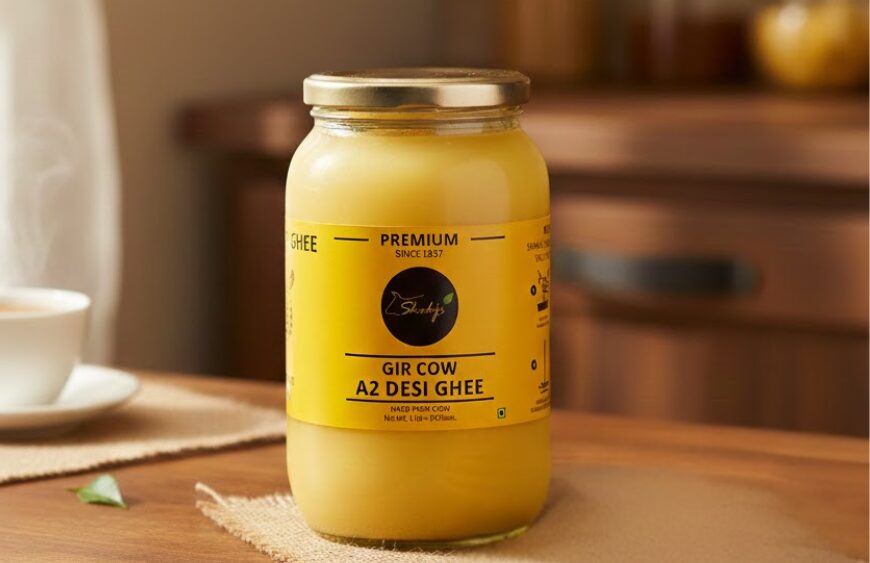
- A2 Gir Cow Ghee: Traditionally prepared Bilona ghee made from indigenous Gir cow milk known for rich aroma and authentic texture.
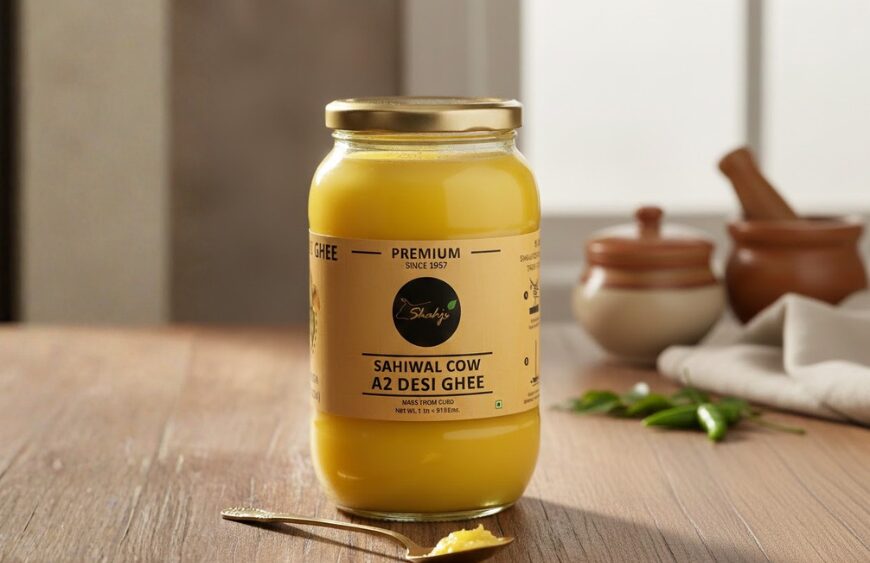
- A2 Sahiwal Cow Ghee: Balanced flavor and smooth aroma suitable for daily family meals and traditional cooking.
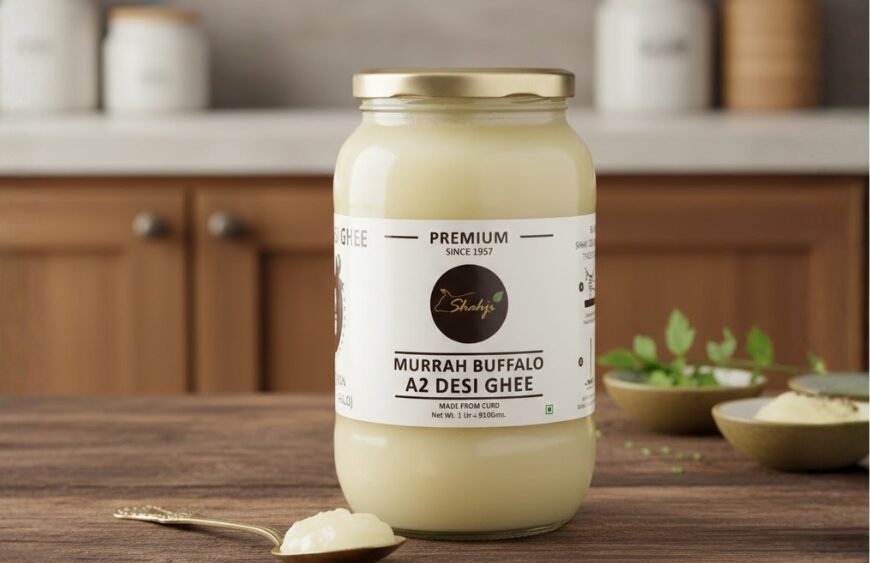
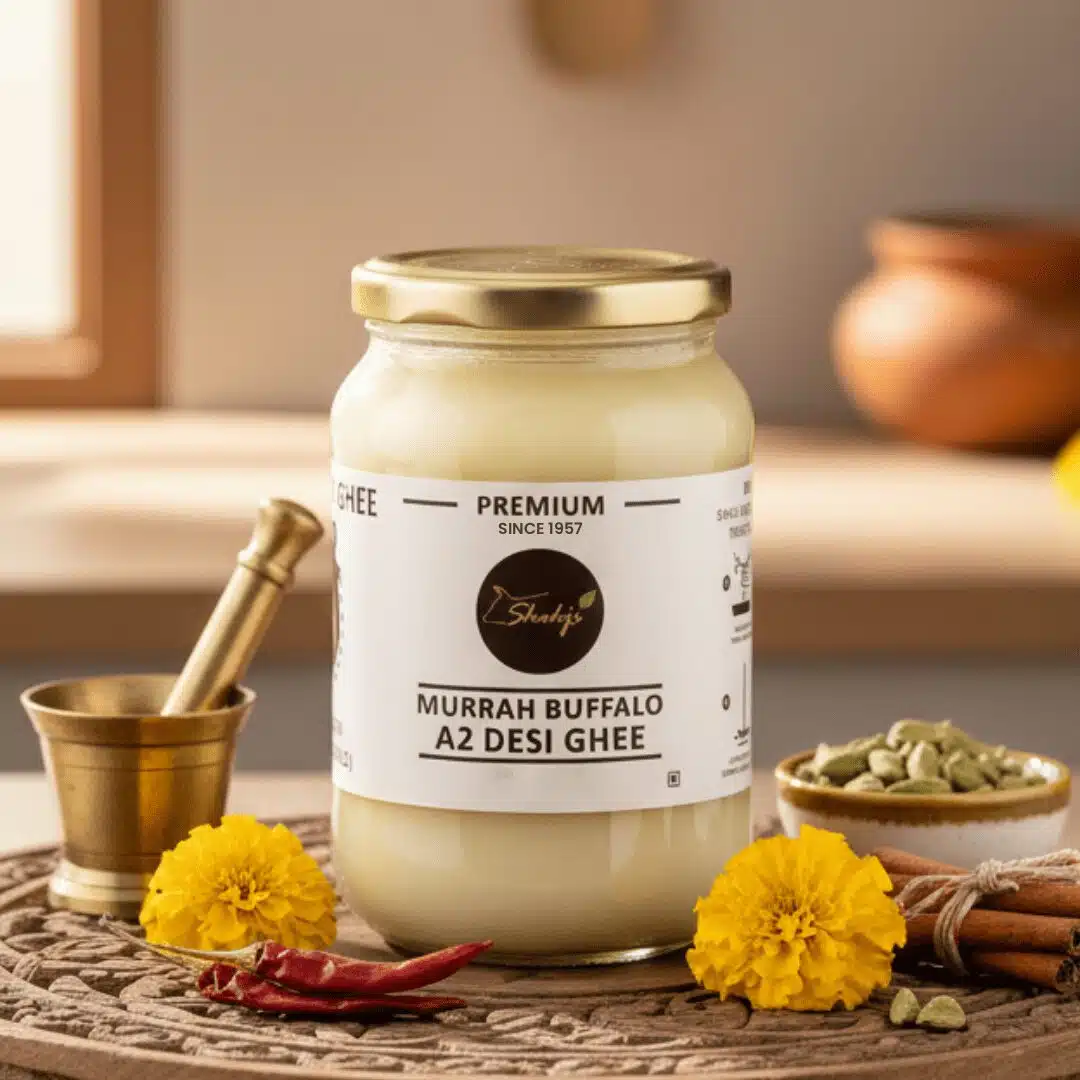
- Murrah Buffalo Ghee: Rich and creamy buffalo ghee commonly preferred for sweets, festive cooking, and rich flavor.

A2 Gir Cow Ghee
500 ML
Best Price: ₹1145 with Coupons

A2 Sahiwal Cow Ghee
500 ML
Best Price: ₹875 with Coupons

Murrah Buffalo Ghee
500 ML
Best Price: ₹665 with Coupons

Many families today prefer traditionally prepared Bilona ghee because preparation quality and milk sourcing significantly influence the overall experience, aroma, texture, and authenticity.
Who Should Consume Ghee in Moderation
Although traditionally prepared ghee can be part of a balanced diet, moderation remains important because ghee is calorie-dense and rich in saturated fat.
Individuals with:
- specific cardiovascular conditions
- doctor-advised
- fat restrictions
- high-calorie diets
- certain digestive sensitivities
should consult a qualified healthcare professional regarding appropriate intake.
Balanced consumption and overall dietary quality remain more important than relying on any single food.
Frequently Asked Questions – FAQs
What is Bilona method?
The Bilona method is a traditional Indian process of making ghee from curd instead of cream. In this method, milk is first converted into curd, the curd is churned to extract butter, and the butter is then slowly heated on a low flame to prepare ghee. This slow curd-churning process is considered the traditional Ayurvedic way of preparing authentic desi ghee.
What makes Bilona ghee different from regular ghee?
Bilona ghee is prepared from curd-churned butter using traditional methods, while regular commercial ghee is often made directly from cream using fast industrial processing.
Because of this traditional preparation, Bilona ghee is commonly known for:
– grainy texture
– richer aroma
– deeper flavor
– traditional authenticity
Many families prefer Bilona ghee for its handmade preparation style and traditional taste.
Why is Bilona ghee expensive?
Bilona ghee requires large quantities of milk, slow preparation, and significant manual effort.
Traditionally, around 25–30 liters of milk may be needed to prepare just 1 liter of Bilona ghee. The complete process includes:
– curd preparation
– butter extraction
– slow heating
– traditional churning
This time-intensive process increases production cost compared to mass-produced commercial ghee.
Is Bilona ghee healthier than regular ghee?
Many people consider traditionally prepared Bilona ghee a better option because it is less processed and prepared using traditional curd-based methods.
Bilona ghee is commonly associated with:
– traditional Indian diets
– natural preparation
– indigenous cow sourcing
– Ayurveda-inspired lifestyles
However, overall quality, purity, and moderation remain important for any type of ghee.
Is Bilona ghee made from A2 milk?
Premium Bilona ghee is often prepared using milk from indigenous Indian cow breeds like Gir and Sahiwal cows, which are naturally associated with A2 beta-casein milk.
However, not all Bilona ghee available in the market is necessarily A2. The quality depends on:
– milk sourcing
– cow breed
– preparation method
This is why many consumers specifically look for A2 Bilona ghee from desi cow breeds.
Why do many families prefer Bilona ghee?
Many families today prefer Bilona ghee because of its connection with:
– traditional Indian food practices
– Ayurveda-based lifestyles
– indigenous cow breeds
– handmade preparation methods
Its growing popularity is also linked with increasing awareness about minimally processed and traditionally prepared foods.
Can Bilona ghee be consumed daily?
Bilona ghee is commonly used in daily Indian meals in moderate quantities.
Many households use it for:
– rotis
– dal
– tadka
– khichdi
– traditional cooking
Because ghee is calorie-dense, balanced consumption is generally recommended as part of an overall healthy diet.
Is Bilona ghee easier to digest
Some people report that traditionally prepared Bilona ghee feels lighter and easier to digest compared to heavily processed commercial ghee.
This is one reason why many families prefer Bilona ghee for:
– regular consumption
– family meals
– traditional diets
However, digestive experience can vary from person to person.
Can lactose intolerant people consume Bilona ghee?
Properly prepared Bilona ghee contains very low amounts of milk solids because the residue is removed during the clarification process.
Because of this, some lactose-sensitive individuals may tolerate ghee better than many other dairy products. Individual tolerance levels may still vary.
Is Bilona ghee good for cooking?
Yes, Bilona ghee is widely used for Indian cooking because of its stable cooking properties and rich flavor.
It is commonly used for:
– tadka
– sautéing
– roasting
– frying
– traditional recipes
Its rich aroma also enhances the taste of many Indian dishes.
Which is better: Bilona ghee or regular ghee?
Many people prefer Bilona ghee because of its:
– traditional preparation
– curd-churned process
– authentic aroma
– grainy texture
Regular ghee is more commonly produced using industrial cream-based methods. The better choice often depends on individual preference, sourcing quality, and preparation method.
How to identify pure Bilona ghee?
Pure Bilona ghee is often identified by:
– rich natural aroma
– grainy texture
– golden appearance
– slow-melt consistency
It is also important to choose brands that are transparent about:
– milk sourcing
– traditional preparation
– purity testing
– indigenous cow breeds
High-quality Bilona ghee should not contain additives, artificial flavoring, or preservatives.
If you want to learn detailed methods to identify authentic desi ghee, you can also read our complete guide on: How to check purity of ghee?
Which cow breeds are commonly used for A2 Bilona ghee?
Traditional A2 Bilona ghee is commonly prepared using milk from indigenous Indian cow breeds such as:
Gir cows
Sahiwal cows
Red Sindhi cows
Kankrej cows
These breeds are naturally known for producing A2 milk and are highly valued in traditional Indian dairy practices.
If you want to learn more about indigenous Indian cow breeds used for A2 dairy production, you can also read our detailed guide on: Top native cow breeds for A2 milk production.
Final Verdict
The Bilona method is much more than a traditional ghee-making process – it represents India’s long-standing connection with authentic dairy preparation, Ayurveda, and slow food practices.
Today, many families prefer Bilona ghee because it is commonly associated with:
- traditional curd-churned preparation
- indigenous cow breeds
- richer aroma and texture
- authentic taste
- minimally processed dairy practices
While modern industrial ghee remains widely available, traditionally prepared Bilona ghee continues to be the preferred choice for households seeking premium-quality, authentic, and traditionally crafted ghee.
Scientific References
Nutrients (2018): Role of Butyrate in Gut Health
https://www.mdpi.com/2072-6643/10/9/1175
National Library of Medicine – Ghee & Digestion Research
https://pubmed.ncbi.nlm.nih.gov/
Charaka Samhita – Ayurvedic Importance of Ghee
https://www.wisdomlib.org/hinduism/book/charaka-samhita-english
Related Articles
Cultured Ghee vs Sweet Cream Ghee: Taste, Aroma and Health

Bilona vs Cream Method: What Truly Changes in Your Ghee?

Ghee Making Process: Step-by-Step Guide to Pure Ghee