A2 Gir Ghee vs Regular Ghee: 2026 Differences & Benefits
Walk down any food aisle, and you’ll see a growing variety of ghee. The labels can be confusing. You have “Pure Ghee”, Desi Ghee”, and then there’s “A2 Gir Cow Ghee”. You might wonder, is it all just marketing, or is there a real difference? When it comes to A2 Gir Ghee vs Regular Ghee, the difference is significant, stemming from the specific cow breed, the unique protein in the milk, and the traditional production methods used. This affects everything from digestibility to nutritional content.
Let’s break down everything you need to know, from the cows themselves to the way the ghee is made, so you can make an informed choice.
What Exactly is A2 Gir Cow Ghee?
A2 Gir cow ghee is a premium clarified butter made exclusively from the milk of Gir cows, a treasured indigenous (or desi) breed from India. What makes this milk special is its protein structure. It only contains a protein called A2 beta casein. If you’re new to this, here’s a clear primer on what A2 ghee is and how the bilona method works.
This type of ghee is often made using the traditional bilona method, an ancient hand churning process. Here’s how it works:
- Whole A2 milk is gently boiled and cooled.
- A starter culture is added to turn the milk into curd.
- This curd is then slowly churned (using a wooden churner called a bilona) to separate the butter.
- Finally, the butter is simmered on a low flame to remove milk solids and water, leaving behind pure, golden ghee.
This slow, artisanal process helps preserve nutrients and gives the ghee a rich, nutty aroma and a beautiful granular texture. You’ll notice A2 Gir cow ghee has a deep yellow color, which comes from the high beta carotene content in the milk of grass fed desi cows. It’s packed with healthy fats and fat soluble vitamins like A, D, E, and K2, earning it the reputation of a superfood.
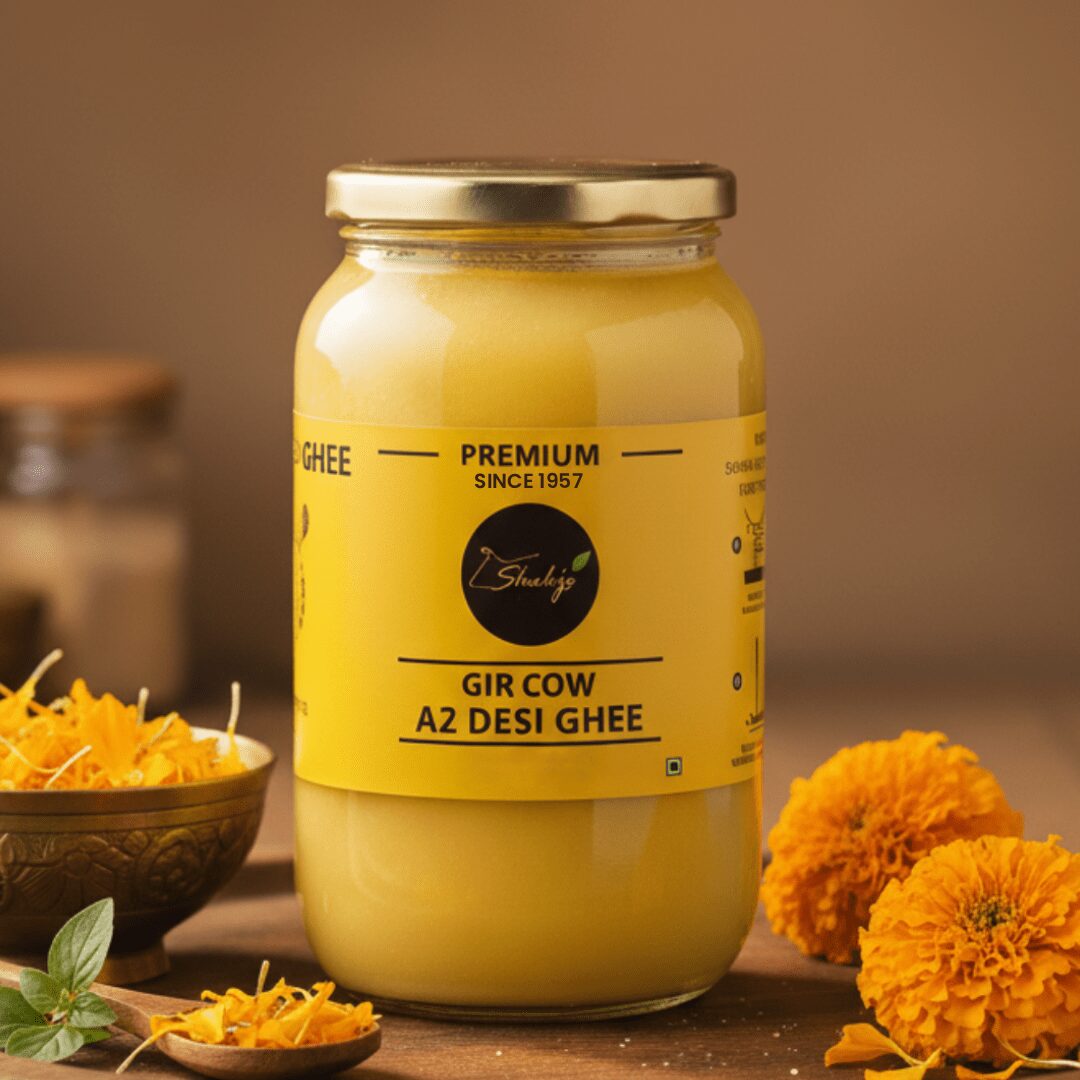
A2 Gir Cow Ghee
1 LTR
Best Price: ₹2125 with Coupons

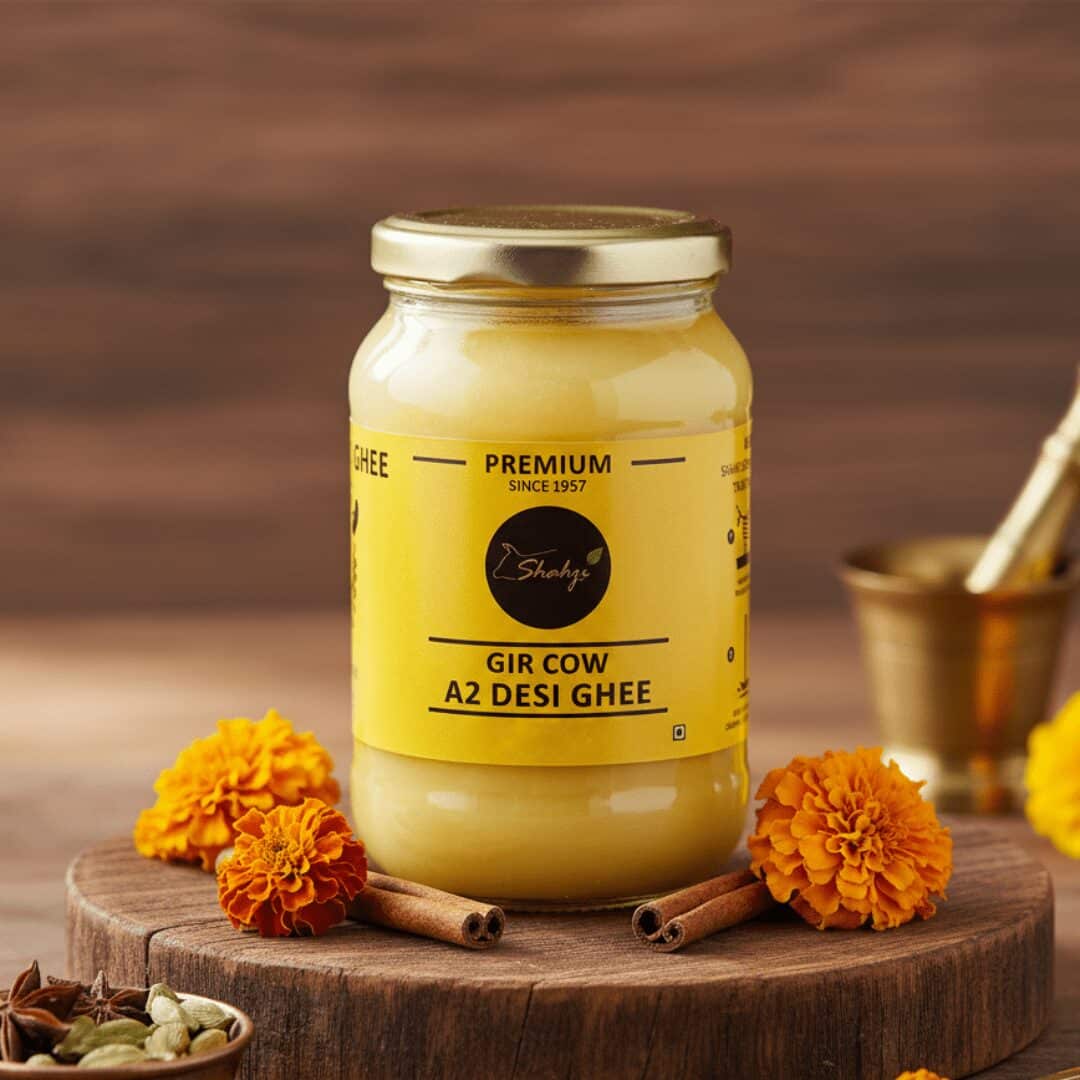
A2 Gir Cow Ghee
500 ML
Best Price: ₹1145 with Coupons
And What About Regular Ghee?
Regular ghee is the clarified butter you commonly find in most stores. It’s typically made from the milk of crossbred or European cow breeds like Holstein Friesian or Jersey. Sometimes, it can also be made from buffalo milk or a mix of different milk sources.
The key difference is that the milk from these cows usually contains a mix of both A1 and A2 beta casein proteins. Unlike its A2 counterpart, regular ghee is often produced on a large industrial scale. Instead of the bilona method, manufacturers use a faster creamery butter method, where cream is separated from milk and heated at high temperatures to produce ghee in large batches.
This process is efficient, but the resulting ghee often has a milder, more neutral flavor and a smoother, waxy texture. If a ghee container just says “Pure Ghee” without specifying a cow breed or “A2,” it’s most likely regular ghee.
A2 Gir Ghee vs Regular Ghee: Key Differences Explained
When you compare A2 Gir ghee vs regular ghee, the differences go far beyond the label. They span everything from the source and production to the potential health impact.
Milk Source: Desi Cows vs. Mixed Breeds
The most fundamental difference lies in the source of the milk.
- A2 Gir Ghee: Comes from a single, specific source: the indigenous Gir cow, which naturally produces only A2 protein milk.
- Regular Ghee: Sourced from mixed herds, often including crossbred cows that produce a combination of A1 and A2 proteins. It may also contain buffalo milk, which was historically a major contributor to India’s milk supply, accounting for nearly half of production in past years.
The Protein Puzzle: A2 vs. A1 Casein
The terms “A2” and “A1” refer to two variants of beta casein, a major protein in milk. The only difference is a single amino acid in their structure.
- A2 Beta Casein: This is the original, ancestral protein found in older cattle breeds like the Gir cow.
- A1 Beta Casein: This is a genetic mutation that appeared in European cattle breeds thousands of years ago.
This tiny structural difference changes how the protein is digested in our bodies.
BCM 7: Why Its Absence in A2 Ghee Matters
When A1 beta casein is digested, it can release a peptide fragment called beta casomorphin 7 (BCM 7). Some studies have linked BCM 7 to digestive discomfort, bloating, and inflammation in sensitive individuals.
Because A2 milk does not contain the A1 protein, no BCM 7 is produced during digestion. This is a primary reason why A2 ghee is considered gentler on the stomach and a healthier choice for long term consumption. This is a crucial point in the A2 Gir ghee vs regular ghee comparison for those with sensitive digestive systems.
The Art of Ghee Making: Bilona vs. Industrial
How ghee is made profoundly affects its quality, taste, and nutritional profile.
- Bilona Method (A2 Ghee): This traditional process involves fermenting milk into curd, which introduces beneficial bacteria. The slow, manual churning of this curd into butter and then gently heating it into ghee is a labor intensive process that preserves a rich flavor and aroma. For an authentic experience, consider trying a ghee made with this ancient technique, like the one offered by Shahji Ghee.
- Industrial Process (Regular Ghee): This modern method prioritizes efficiency. Cream is separated from milk by machines and clarified at high temperatures. This process is fast and produces a consistent product but often lacks the nuanced flavor and grainy texture of bilona ghee.
A Treat for Your Taste Buds: Aroma and Flavor
If you do a side by side taste test of A2 Gir ghee vs regular ghee, you’ll immediately notice a difference.
- A2 Gir Ghee: Has a rich, nutty aroma and a complex, slightly sweet flavor. Its golden color is a feast for the eyes, and its grainy texture melts beautifully on the tongue.
- Regular Ghee: Tends to be much milder in aroma and has a more neutral, one dimensional flavor. Its color can range from pale yellow to white (especially if it contains buffalo milk), and it often has a smooth, waxy texture.
Health and Nutrition: The Deeper Dive
Both types of ghee are a source of healthy fats, but their nutritional profiles and health impacts can differ.
Which is Easier to Digest?
While all pure ghee is lactose free, many people find A2 ghee easier to digest. The primary reason is the absence of the BCM 7 peptide from A1 protein, which can cause digestive issues for some. A double blind study found that people drinking A1 milk reported significantly more bloating and abdominal pain compared to when they drank A2 milk. By extension, choosing A2 ghee eliminates this potential irritant, making it a gut friendly option.
The Ayurvedic Perspective: Why Desi Ghee is “Liquid Gold”
In Ayurveda, traditional Indian medicine, ghee from desi cows (ghrita) is revered as “liquid gold.” It’s considered a sattvic food that promotes mental clarity, aids digestion, and boosts ojas (vital life energy). Ayurvedic texts specifically praise ghee from indigenous humped cows (like the Gir), which are naturally A2 breeds. This ancient endorsement is a major reason for the renewed interest in the difference between A2 Gir ghee vs regular ghee.
The Power of Butyric Acid for a Happy Gut
Ghee is one of the best dietary sources of butyric acid, a short chain fatty acid that is the preferred fuel for the cells lining our colon. Butyric acid helps maintain a healthy gut barrier and has anti inflammatory properties. This makes ghee, especially pure A2 ghee, a wonderful addition to your diet for supporting digestive health.
More Than Just Fat: CLA and Vitamins
Ghee is a powerhouse of nutrients. For a full macronutrient and micronutrient breakdown, see the nutritional value of ghee. It contains:
- Conjugated Linoleic Acid (CLA): A healthy fatty acid linked to fat loss and anti inflammatory benefits.
- Fat Soluble Vitamins: It’s rich in vitamins A, D, E, and K2, which are crucial for vision, immunity, skin health, and bone density.
Does a Grass Fed Diet Really Make a Difference?
Absolutely. What a cow eats directly impacts the quality of its milk and ghee. Ghee from grass fed cows (a common practice for raising Gir cows) is nutritionally superior. Learn more about grass-fed vs grain-fed ghee. Research shows that grass fed dairy can have:
- Up to 500% more CLA
- A healthier ratio of omega 3 to omega 6 fatty acids
- Higher levels of beta carotene (precursor to Vitamin A) and Vitamin K2
The Practical Side: Purity, Price, and Picking the Right Ghee
Before you buy, it’s important to understand the practical aspects of the A2 Gir ghee vs regular ghee choice.
Purity Concerns: How to Avoid Adulterated Ghee
Ghee adulteration is a serious concern. Some unethical producers mix ghee with cheaper vegetable oils or hydrogenated fats (vanaspati). Always buy from a trusted brand that guarantees purity. For a checklist of red flags and verification steps, see how to buy A2 desi ghee online. Reputable brands like Shahji Ghee ensure their products are lab certified to be free from any adulterants, providing peace of mind with every spoonful.
Why is A2 Gir Cow Ghee More Expensive?
The premium price of A2 Gir cow ghee is justified by several factors:
- Low Yield: It can take 25 to 30 liters of A2 cow milk to produce just one liter of bilona ghee.
- Limited Milk Supply: Indigenous cows like Gir produce less milk than crossbred cows.
- Labor Intensive Process: The traditional bilona method requires significant manual effort and time.
- Quality and Purity: The cost includes maintaining pure breeds and conducting quality checks.
How to Check for Authentic A2 Gir Ghee
Here are a few tips to ensure you’re buying the real deal. Not sure what “desi ghee” means? Start with this explainer on what is desi ghee:
- Check the Label: Look for the cow breed (Gir), method (Bilona), and FSSAI certification.
- Observe the Texture: Authentic bilona ghee should have a grainy texture when solid.
- Smell and Taste: It should have a rich, nutty aroma and a deep, delicious flavor.
- Note the Color: It should have a natural golden yellow hue.
A Note for the Lactose Intolerant
Good news! Ghee is an excellent choice for people with lactose intolerance. The ghee making process removes almost all milk solids, including lactose (the milk sugar) and casein (the milk protein). If you’re comparing dairy fats, here’s ghee vs butter for cooking and health. This makes both A2 and regular ghee generally safe for those who can’t digest milk, allowing you to enjoy a rich, buttery flavor without the digestive distress.
Frequently Asked Questions about A2 Gir Ghee vs Regular Ghee
What is the main difference between A2 Gir ghee and regular ghee?
The primary difference is the source. A2 Gir ghee comes from indigenous Gir cows that produce only A2 beta casein protein, while regular ghee comes from crossbred cows that produce a mix of A1 and A2 proteins. This affects digestibility and nutritional profile.
Is A2 ghee healthier than regular ghee?
Many consider A2 ghee healthier because it lacks the A1 protein, which can cause digestive issues for some people. It is also often made using traditional methods and sourced from grass fed cows, resulting in a higher concentration of nutrients like CLA and vitamins. You can read our full detailed guide: A1 ghee vs A2 ghee.
Why is A2 ghee yellow?
The distinct golden yellow color of A2 Gir cow ghee comes from beta carotene, a pigment found in the fresh grass that the cows eat. Beta carotene is a precursor to Vitamin A.
Can I use regular ghee if I can’t find A2 ghee?
Yes, pure regular ghee is still a healthy cooking fat. However, if you have a sensitive stomach or are looking for the maximum nutritional benefits, the choice of A2 Gir ghee vs regular ghee leans in favor of A2.
Is buffalo ghee considered A1 or A2?
Buffalo milk naturally contains only the A2 type of beta casein protein. However, buffalo ghee is different from cow ghee in its nutritional composition, being heavier and typically white in color. For a detailed look at benefits and uses, see Buffalo ghee benefits.
Ultimately, the choice between A2 Gir ghee vs regular ghee comes down to your priorities. If you value tradition, superior flavor, and potential digestive and nutritional benefits, A2 Gir cow ghee is an excellent investment in your health.
Related Articles

Sahiwal Cow Ghee vs Gir Cow Ghee: 2026 Comparison Guide

What Is A2 Ghee? Benefits, Bilona Method & Uses (2026)

Buffalo Ghee Benefits for Health, Skin & Immunity

A2 Cow Ghee: Ghee That Best Suits Your Lifestyle For A Health Boost