A1 Ghee Vs A2 Ghee: Which is Best for Health?
Last Updated: May 2026
There has been growing awareness around the difference between A1 ghee and A2 ghee, especially among people looking for healthier, traditionally prepared dairy products. Many families today prefer A2 ghee because it is often considered easier to digest, more suitable for daily use, and closely connected with traditional Indian dairy practices.
Both A1 and A2 ghee are prepared from milk fat, but the major difference begins with the type of beta-casein protein present in the milk used to make the ghee.
In simple terms:
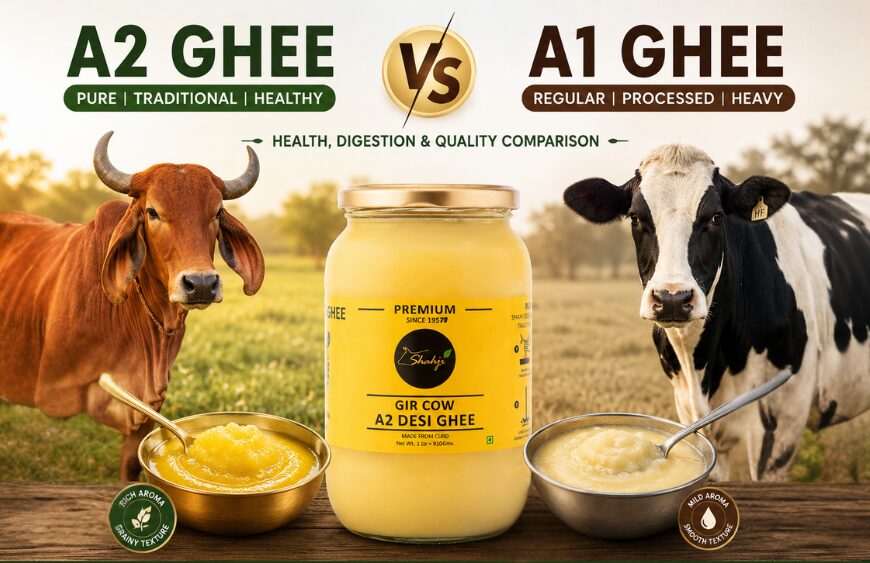
- A2 ghee is prepared from milk of indigenous desi cows that naturally produce A2 beta-casein protein.
- A1 ghee or regular ghee is often sourced from hybrid or mixed breed cows that may produce A1 beta-casein.
This difference in milk protein is one of the main reasons why many people compare A1 ghee vs A2 ghee when choosing ghee for digestion, Ayurveda, and daily consumption.
In this detailed guide, we compare A1 and A2 ghee based on:
- digestion and BCM-7
- release nutritional differences
- traditional bilona preparation
- Ayurveda perspective
- suitability for daily use
- indigenous vs hybrid cow breeds
- texture, aroma, and quality
- health and lifestyle preferences
By the end, you will clearly understand the practical differences between A1 and A2 ghee and which type may suit your needs better.
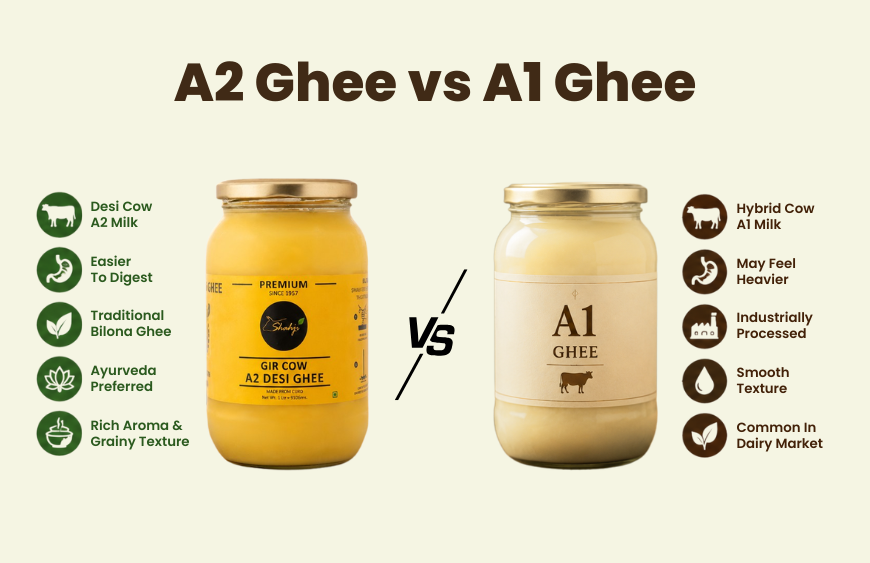
A1 Ghee vs A2 Ghee – Quick Comparison
| Feature | A2 Ghee | A1 Ghee |
|---|---|---|
| Milk Source | Indigenous desi cows | Hybrid or mixed breeds |
| Beta-Casein Type | A2 beta-casein | May contain A1 beta-casein |
| BCM-7 Release | No BCM-7 release | Possible BCM-7 release |
| Digestibility | Easier for many people | May feel heavier for some |
| Preparation | Often traditional bilona | Commonly industrial |
| Texture | Grainy and aromatic | Smooth texture |
| Ayurveda Preference | Highly preferred | Less emphasized |
| Daily Use | Commonly preferred | Depends on sourcing |
Quick Answer – Which is Better?
For most families, A2 ghee is generally considered the better option for regular consumption because it is:
- associated with easier digestion
- commonly prepared using traditional methods
- preferred in Ayurveda
- sourced from indigenous Indian cow breeds
- Valued for its richer aroma and grainy texture
A1 ghee is still widely consumed and used in commercial dairy products, but many people today prefer A2 ghee because of its traditional sourcing and digestive comfort.
The overall quality of milk and preparation method remain equally important.
What is Difference Between A1 and A2 Milk Protein
Milk naturally contains several proteins, and one of the most important is beta-casein.
There are two common variants of beta-casein:
- A1 beta-casein
- A2 beta-casein
The difference between them comes down to a small variation in amino acid structure.
Traditional Indian desi cow breeds like:
- Gir cows
- Sahiwal cows
- Red Sindhi cows
- Kankrej cows
naturally produce A2 beta-casein milk.
Many hybrid or exotic breeds may produce A1 beta-casein or a mix of both A1 and A2 proteins.
This protein variation is the foundation of the A1 vs A2 dairy discussion.
Why Many People Prefer A2 Ghee
Many families today prefer A2 ghee because it is commonly associated with:
- easier digestion
- traditional Indian dairy practices
- bilona preparation methods
- indigenous cow breeds
- less processed production methods
- richer aroma an grainy texture
A2 ghee is especially popular among people who:
- consume ghee daily
- prefer Ayurvedic lifestyle
- look for traditionally prepared foods
- want curd churned bilona ghee
Its growing popularity is closely linked with increasing awareness about indigenous dairy breeds and traditional food preparation methods.
The BCM-7 Effect: Why A2 Is Considered Gentler
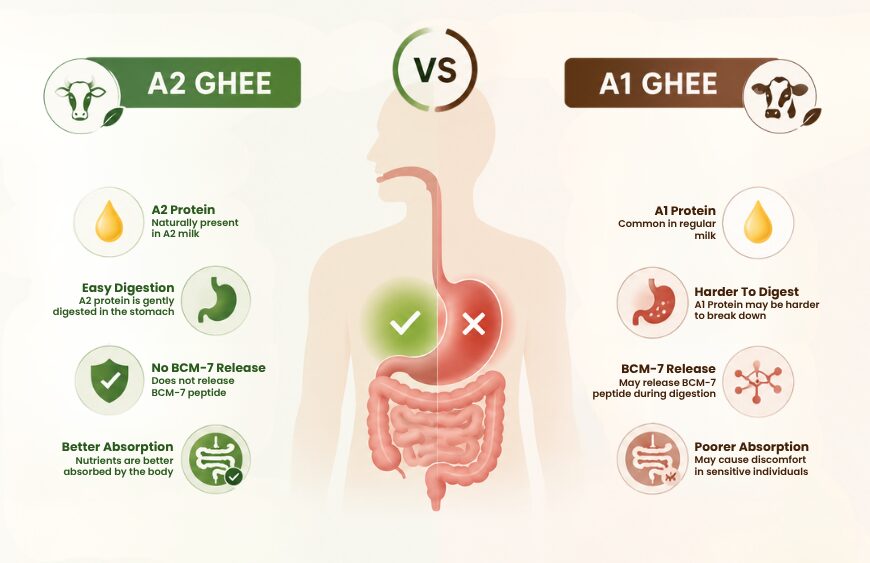
One of the major discussions in the A1 vs A2 comparison revolves around a peptide called BCM-7 (Beta Casomorphin-7).
When A1 beta-casein is digested, some studies suggest that it may release BCM-7 during digestion.
Some researchers believe BCM-7 may contribute to digestive discomfort in sensitive individuals.
On the other hand, A2 beta-casein has a different amino acid structure that prevents BCM-7 release during digestion.
This is one reason many people report that A2 dairy products feel lighter and easier to digest compared to regular dairy products.
The main takeaway in the A1 ghee vs A2 ghee comparison is that A2 ghee is commonly preferred for digestive comfort and traditional daily use.
What Does Current Research Say About A1 & A2 Ghee
Research around A1 and A2 dairy is still evolving.
Some studies and consumer experiences suggest that A2 dairy products may feel easier to digest for certain individuals compared to regular dairy products. Much of this discussion focuses on the BCM-7 peptide released during digestion of A1 beta-casein.
However, scientific findings are still mixed, and more long-term human research is needed to establish definitive conclusions.
Many people choose A2 ghee not only because of the A2 protein discussion, but also because it is commonly associated with:
- traditional bilona preparation
- indigenous Indian cow breeds
- less processed dairy practices
- curd based preparation method
Overall quality, sourcing, and moderation remain equally important when choosing any type of ghee.
Is A2 Ghee Really Better Than Regular Ghee
The answer depends on multiple factors.
Many people consider A2 ghee better because of:
- indigenous cow sourcing
- easier digestibility
- traditional bilona preparation
- Ayurveda preference
- curd based production process
However, preparation quality matters just as much as the protein type.
High-quality traditionally prepared ghee from clean milk sources is generally considered superior to heavily processed industrial ghee.
This is why many families today focus not only on A1 vs A2, but also on:
- bilona preparation
- milk quality
- sourcing transparency
- traditional methods
A1 Ghee vs A2 Ghee – Key Differences
| A2 Ghee | A1 Ghee |
|---|---|
| Prepared from indigenous desi cow breeds | Often sourced from hybrid or mixed breeds |
| Contains A2 beta-casein protein | May contain A1 beta-casein |
| Commonly associated with easier digestion | Some individuals report digestive discomfort |
| Often prepared using traditional bilona methods | Frequently industrially produced |
| Rich natural aroma and grainy texture | Smoother commercial texture |
| Preferred in Ayurveda and traditional diets | Common in mass-market dairy products |
| Often sourced from grass-fed indigenous cows | Large-scale dairy sourcing varies |
Nutritional Comparison: A1 Ghee vs A2 Ghee
Both A1 and A2 ghee are primarily composed of milk fat and contain:
- fat soluble vitamins
- healthy fatty acids
- butyric acid
- CLA (Conjugated Linoleic Acid)
However, many people believe the real difference lies more in:
- digestibility
- sourcing
- processing quality
- traditional prepation
rather than drastic nutritional differences.
Traditionally prepared A2 bilona ghee is often valued for its:
- richer aroma
- grainy texture
- curd based preparation
- indigenous milk sourcing
Digestibility: Why A2 Ghee Feels Easier for Many People
One of the biggest reasons people switch to A2 ghee is digestion.
Many people report that A2 ghee feels:
- lighter on the stomach
- easier to digest
- more suitable for regular use
This is especially important for:
- Children
- elderly indivisuals
- people with sensitive digestion
- people who feel discomfort after consuming regular dairy
Traditional Ayurvedic practices also place greater emphasis on indigenous cow ghee for regular consumption.
A1 Ghee vs A2 Ghee in Ayurveda
Ayurveda traditionally gives special importance to ghee prepared from indigenous cow milk.
A2 cow ghee is commonly associated with:
- Ojas-building
- nourishment
- digestion support
- rejuvenation practices
Traditionally prepared bilona ghee has long been used in:
- Panchakarma therapies
- Ayurvedic formulations
- religious rituals
- wellness routines
Because of this deep traditional connection, many Ayurveda-focused households prefer A2 bilona ghee.
Why Bilona Preparation Matters
The quality of ghee depends not only on the milk source but also on how it is prepared.
Traditional bilona ghee is prepared by:
- converting milk into curd
- churning curd into butter
- slowly heating butter into ghee
This slow process is very different from industrial cream-based production methods used in mass-produced ghee.
Many families prefer bilona ghee because of its:
- richer aroma
- grainy texture
- curd-based preparation
- traditional authenticity
Traditional Bilona Ghee vs Industrial Ghee
| Traditional Bilona Ghee | Industrial Ghee |
|---|---|
| Prepared from curd-churned butter | Often cream-based production |
| Slow traditional process | Large-scale rapid production |
| Grainy texture | Uniform smooth texture |
| Rich aroma | Mild aroma |
| Traditionally preferred | Commercial mass-market production |
| Often sourced from indigenous cows | Sourcing varies |
The preparation method can significantly influence:
- aroma
- texture
- authenticity
- overall experience
Best Health Benefits of A2 Ghee
1. May Support Easier Digestion
Many people find A2 ghee easier to digest and more comfortable for daily consumption.
2. Traditionally Valued for Daily Nourishment
Ghee has been used in Indian households for generations as part of balanced traditional diets.
3. Supports Cooking Stability
A2 ghee has a high smoke point, making it suitable for:
- tadka
- sautéing
- roasting
- traditional cooking
4. Rich Aroma & Traditional Flavor
Bilona-prepared A2 ghee is widely valued for its deep aroma and authentic taste.
5. Popular in Ayurveda-Based Lifestyles
A2 cow ghee is commonly used in traditional Ayurvedic wellness practices.
Who Should Choose A2 Ghee
| If You Want | Better Choice |
|---|---|
| Easier digestion | A2 Ghee |
| Traditional bilona preparation | A2 Ghee |
| Ayurveda-focused lifestyle | A2 Ghee |
| Daily family use | A2 Ghee |
| Rich aroma & grainy texture | A2 Ghee |
| Indigenous cow sourcing | A2 Ghee |
| Mass-market budget option | Regular ghee |
How to Choose High Quality Ghee
Regardless of whether you choose A1 or A2 ghee, quality matters the most.
Look for ghee that is:
- traditionally prepared
- sourced from quality milk
- free from additives
- transparent about sourcing
- lab tested for purity
Many families today prefer bilona-prepared ghee because of its:
- curd-based preparation
- grainy texture
- authentic aroma
- traditional process
Explore Traditional Prepared A2 Bilona Ghee
Understanding the difference between A1 and A2 ghee becomes more meaningful when the ghee is prepared using traditional methods and sourced from indigenous cow breeds.
Many families today prefer traditionally prepared A2 bilona ghee because of its:
- richer aroma
- grainy texture
- curd-based preparation
- traditional authenticity
If you are exploring premium A2 ghee varieties, you can explore:
- Gir Cow A2 Ghee: Traditionally prepared bilona ghee made from curd-churned butter and sourced from indigenous Gir cows
- Sahiwal Cow A2 Ghee: Balanced flavor and smooth aroma suitable for regular family meals and daily cooking.
- Murrah Buffalo Ghee: Rich and creamy buffalo ghee commonly preferred for sweets and festive preparations.
Many families today prefer exploring traditionally prepared bilona ghee made from indigenous cow breeds because sourcing and preparation quality can significantly influence overall aroma, texture, and authenticity.

A2 Gir Cow Ghee
500 ML
Best Price: ₹1145 with Coupons

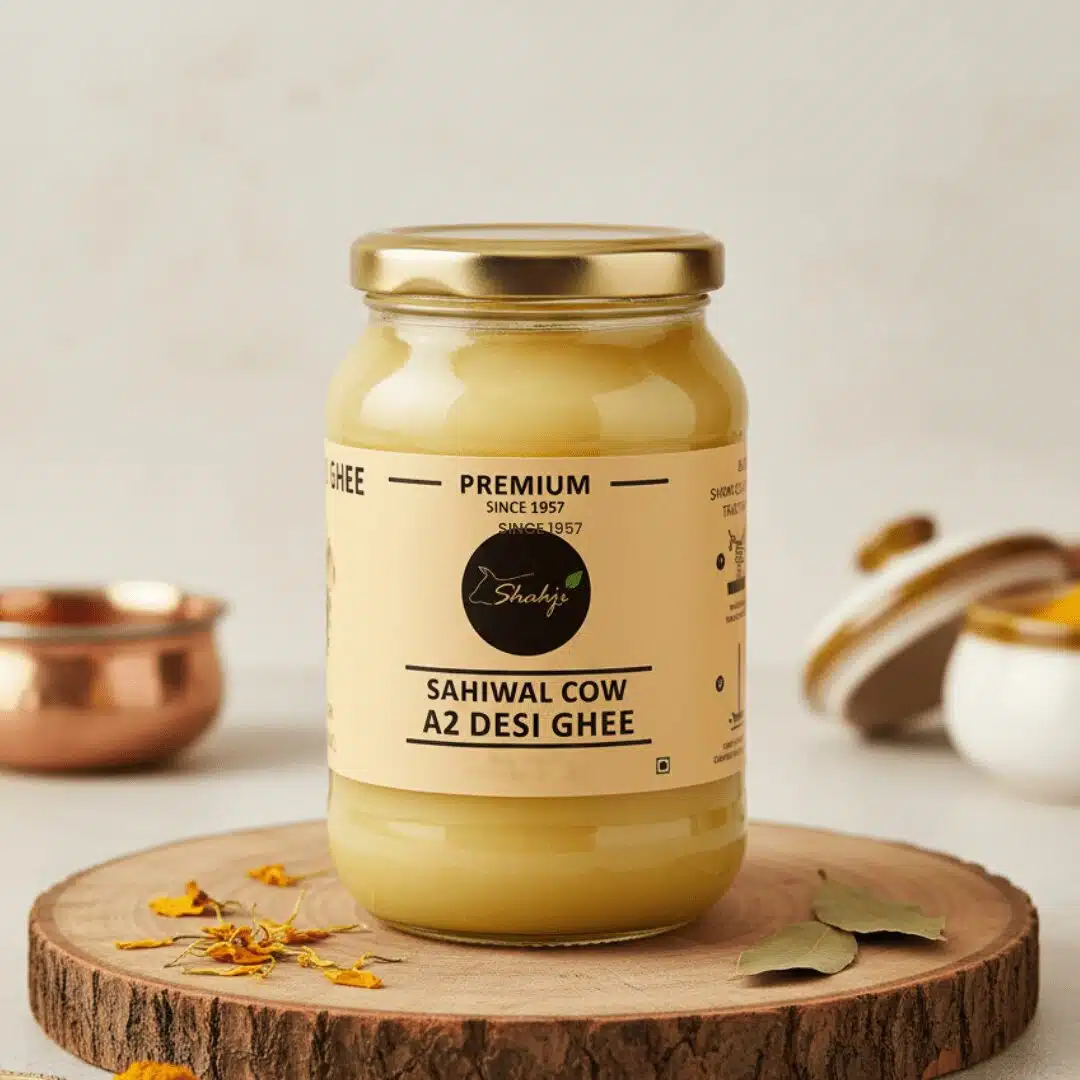
A2 Sahiwal Cow Ghee
500 ML
Best Price: ₹875 with Coupons

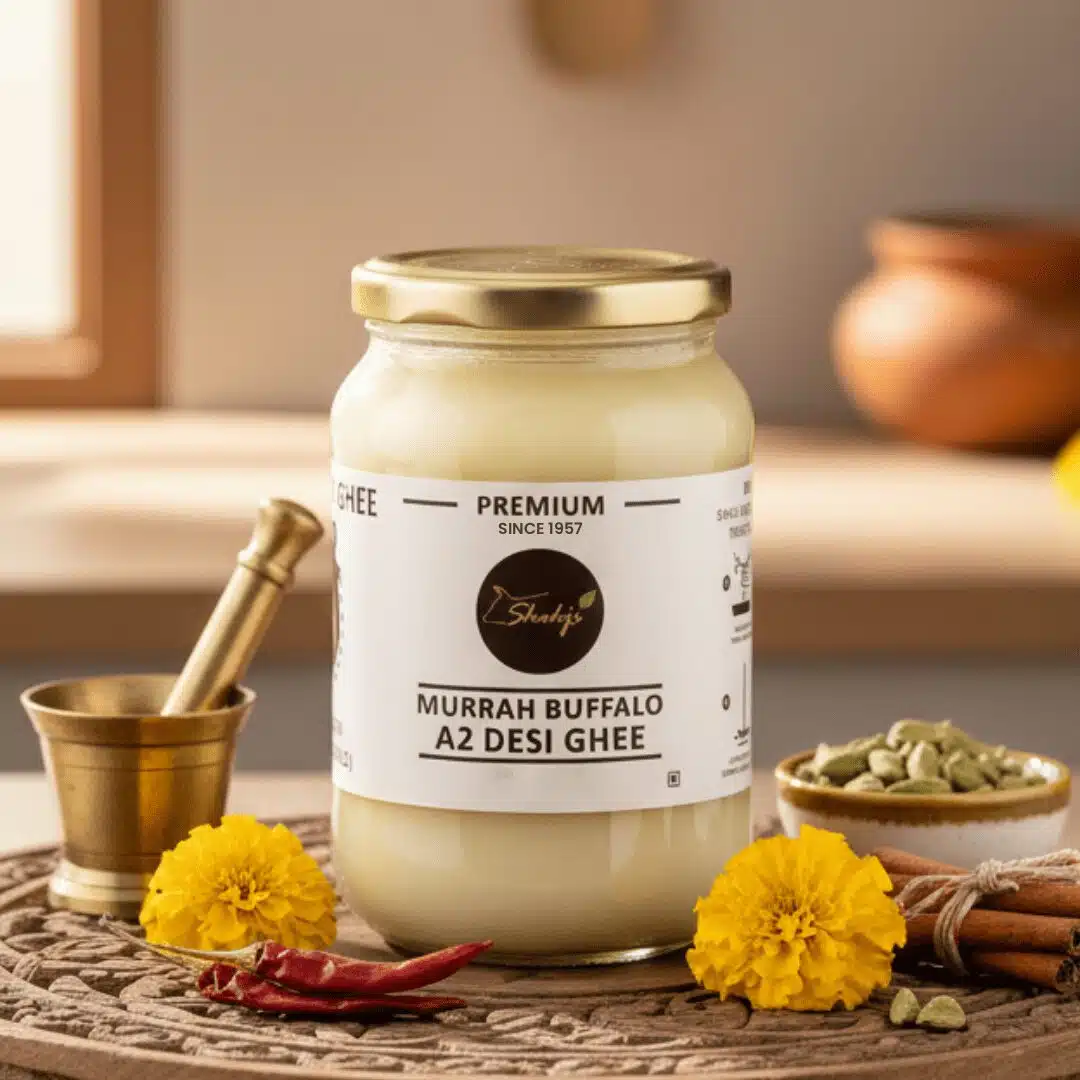
Murrah Buffalo Ghee
500 ML
Best Price: ₹665 with Coupons

For most households focused on traditional dairy practices and regular consumption, A2 bilona ghee is generally the preferred option.
Who Should Consume Ghee in Moderation
Although high-quality ghee can be part of a balanced diet, moderation is still important because ghee is calorie-dense and rich in saturated fat.
Individuals with:
- specific cardiovascular conditions
- doctor advised fat restrictions
- high calories excess diets
- certain digestive sensitivities
should consult a qualified healthcare professional regarding appropriate intake.
Balanced consumption and overall dietary quality remain more important than relying on any single food.
Which Type of Ghee is Better for Different Needs
| If You Want | Better Choice |
|---|---|
| Easier digestion | A2 Ghee |
| Ayurveda-focused lifestyle | A2 Ghee |
| Traditional bilona preparation | A2 Ghee |
| Budget-friendly regular ghee | A1 Ghee |
| Indigenous cow sourcing | A2 Ghee |
| Daily family consumption | A2 Ghee |
| Commercial cooking use | A1 Ghee |
Why Many Families are Switching to A2 Ghee
Across India, many families are gradually shifting toward traditionally prepared A2 bilona ghee as awareness around food sourcing and traditional dairy practices continues to grow.
This shift is not only related to the A1 vs A2 protein discussion, but also because many consumers today prefer:
- traditional bilona preparation methods
- curd churned ghee
- indigenous Indian cow breeds
- less processed dairy products
- farm sourcing transparency
- authentic aroma and grainy texture
Many Ayurveda-focused households also prefer A2 cow ghee because of its long-standing traditional association with daily nourishment and balanced living.
The growing interest in desi cow breeds like Gir and Sahiwal has further increased awareness around traditionally prepared A2 dairy products.
For many consumers today, choosing A2 bilona ghee is not just about nutrition alone. It is also about:
- traditional food values
- cleaner dairy practices
- digestive comfort
- authentic preparation methods
- supporting indigenous cattle heritage
- overall lifestyle preferences
As a result, traditionally prepared A2 ghee continues to become a preferred choice for many modern households looking for premium-quality and traditionally crafted dairy products.
Frequently Asked Questions – FAQs
Is A1 or A2 ghee better?
Many families prefer A2 ghee because it is associated with easier digestion, traditional bilona preparation, and indigenous cow breeds. A1 ghee is still commonly consumed, but A2 ghee is generally preferred for Ayurveda-focused lifestyles and daily use.
Why do many people prefer A2 ghee?
Many families prefer A2 ghee because it is associated with indigenous cow breeds, traditional bilona preparation, and easier digestion for some individuals. It is also commonly used in Ayurveda-focused lifestyles and traditional Indian diets.
Is A2 ghee considered better than regular ghee?
Many consumers prefer A2 ghee because of its traditional sourcing, bilona preparation methods, and perceived digestive comfort. However, overall quality, milk sourcing, and preparation method are equally important factors.
Why is A2 ghee so costly?
A2 ghee is prepared from A2 milk which comes from desi cow breeds like Gir, Sahiwal, and others. They are mostly grass-fed and given natural nutrients. These cows give milk as per their natural capacity of 12-15 litres per day.
A1 milk comes from hybrid cows which are treated as milk machines and are given a diet of hormonal growth injections. That is why A2 ghee costs more than normal ghee.
Can lactose intolerant people consume A2 ghee?
Since properly prepared ghee contains very low milk solids, some lactose-sensitive individuals may tolerate it better than regular dairy products. However, tolerance varies from person to person.
What is the difference between bilona ghee and regular ghee?
Bilona ghee is traditionally prepared by converting milk into curd, churning it into butter, and slowly heating it into ghee. Regular commercial ghee is often produced through faster cream-based industrial methods.
Which Indian cow breeds produce A2 milk?
Traditional Indian breeds like Gir, Sahiwal, Red Sindhi, and Kankrej cows are naturally known for producing A2 beta-casein milk.
Final Verdict: A1 Ghee vs A2 Ghee
Both A1 and A2 ghee are sources of healthy fats and traditional dairy nutrition.
However, many families today prefer A2 ghee because of its:
- indigenous cow sourcing
- traditional bilona preparation
- digestive comfort
- Ayurveda preference
- richer aroma and texture
The most important factors remain:
- milk quality
- preparation method
- sourcing transparency
- moderation in consumption
Traditionally prepared bilona A2 ghee sourced from indigenous cows continues to be the preferred choice for many households looking for authentic and premium-quality ghee.
Scientific References
Nutrients (2018): Role of Butyrate in Gut Health
https://www.mdpi.com/2072-6643/10/9/1175
National Library of Medicine – BCM-7 Research
https://pubmed.ncbi.nlm.nih.gov/
Charaka Samhita – Ayurvedic Importance of Ghee
https://www.wisdomlib.org/hinduism/book/charaka-samhita-english
Related Articles
Sahiwal Cow: Milk Profile, Ghee Characteristics and Native Regions

Grass Fed Ghee vs Grain Fed Ghee – What’s Better?

Best Ghee in India (2026): 14 Best A2 & Bilona Ghee Brands Compared

Sahiwal Cow Ghee in Ayurveda: An Ancient Superfood for Modern Living