
Cow Ghee vs Buffalo Ghee: Which Is Better for Health, Digestion & Weight Loss? (2026 Guide)

When comparing cow ghee vs buffalo ghee, many people wonder which one is healthier, easier to digest, and better for daily consumption. Both types of ghee have been used in Indian households for centuries and are valued in traditional cooking, Ayurveda, and modern nutrition.
However, cow ghee and buffalo ghee differ significantly in:
- fat composition
- texture and aroma
- digestibility
- calorie density
- Ayurvedic properties
- suitability for different health goals
In simple terms:
- Cow ghee is lighter, smoother, and generally easier to digest.
- Buffalo ghee is thicker, denser, and richer in fat and energy.
The right choice depends on your lifestyle, digestion, cooking preferences, and nutritional goals.
In this detailed guide, we compare cow ghee and buffalo ghee based on:
- nutritional science
- digestion and metabolism
- weight management
- cholesterol and heart health
- Ayurvedic perspective
- cooking performance
- suitability for children and elderly people
- texture, aroma, and daily usability
By the end, you will clearly understand which type of ghee is best for your needs.
You may also want to read:
- A1 vs A2 ghee differences
- What is bilona ghee
- Best ghee in India
- Benefits of A2 ghee
- How much ghee should you eat daily
Cow Ghee vs Buffalo Ghee – Quick Comparison
| Feature | Cow Ghee | Buffalo Ghee |
| Color | Golden yellow | White or pale cream |
| Texture | Light and smooth | Thick and dense |
| Digestibility | Easier to digest | Heavier on digestion |
| Aroma | Mild and balanced | Rich and strong |
| Fat Content | Slightly lower | Higher |
| Best For | Daily use, kids, elderly | Sweets, high-energy diets |
| Ayurvedic Perspective | Considered lighter (Laghu) | Considered heavier |
| Cooking Use | Daily meals, tadka, rotis | Rich sweets and festive foods |
| Calorie Density | High | Slightly higher |
Quick Answer: Which Is Better?
For most families and daily consumption, cow ghee is usually considered the better option because it is:
- lighter on digestion
- easier to consume regularly
- preferred in Ayurveda
- suitable for all age groups
Buffalo ghee, on the other hand, is ideal for:
- high-calorie diets
- traditional sweets
- physically active individuals
- people who prefer a richer flavor
Both can be healthy when consumed in moderation and sourced from high-quality milk.
Understanding the Core Difference: Milk Source Matters
The biggest difference between cow ghee and buffalo ghee begins with the milk itself.
Since ghee is prepared from milk fat, the nutritional structure and fat composition of the milk directly influence the final product.
Average Fat Content in Milk
| Milk Type | Average Fat Content |
| Cow Milk | 3–5% |
| Buffalo Milk | 6–8% |
Buffalo milk naturally contains more fat and total solids. This leads to:
- higher ghee yield
- denser texture
- richer mouthfeel
- slightly increased calories
Cow milk contains smaller fat globules, which generally makes cow ghee smoother and easier to digest.
Milk Biochemistry Differences
Beyond fat percentage, cow milk and buffalo milk differ in their biochemical structure.
Buffalo Milk
- Larger fat globules
- Higher total solids
- Denser texture
- Richer consistency
Cow Milk
- Smaller fat globules
- Better fat dispersion
- More beta-carotene
- Lighter composition
Smaller fat globules in cow milk generally emulsify more efficiently and may support easier digestion.
This is one reason many people feel cow ghee is lighter on the stomach compared to buffalo ghee.
Why Is Cow Ghee Yellow and Buffalo Ghee White?
One of the most noticeable differences is color.
- Cow ghee: golden yellow
- Buffalo ghee: creamy white
This difference is natural and mainly related to beta-carotene.
The Science Behind Cow Ghee’s Yellow Color
Cow milk contains natural beta-carotene from green fodder and grass.
During ghee preparation:
- beta-carotene gets concentrated in the fat
- the ghee develops a golden-yellow appearance
This is especially visible in indigenous Indian breeds like:
- Gir cows
- Sahiwal cows
- Tharparkar cows
Buffalo milk converts most carotene into Vitamin A, which is why buffalo ghee appears whiter.
Does Yellow Ghee Mean Better Quality?
Not necessarily.
The color of ghee depends on:
- breed of animal
- fodder quality
- seasonal grazing
- preparation method
Grass-fed cows often produce deeper yellow ghee, while stall-fed cows may produce lighter shades.
Natural seasonal variation is normal and usually indicates minimal processing.
Nutritional Comparison: Cow Ghee vs Buffalo Ghee
Both cow ghee and buffalo ghee are almost pure milk fat, but they differ slightly in micronutrients and fatty acid composition.
| Nutrient | Cow Ghee | Buffalo Ghee |
| Calories | 890–900 kcal | 870–890 kcal |
| Total Fat | ~99g | ~99g |
| Saturated Fat | Moderate-high | Slightly higher |
| Vitamin A | Higher | Moderate |
| Beta-Carotene | Present | Minimal |
| CLA | Present | Present |
| Butyric Acid | Present | Present |
The calorie difference between the two is relatively small.
Choosing between them should depend more on:
- digestion
- texture preference
- intended use
- overall diet quality
rather than calories alone.
Digestibility: Which Is Easier to Digest?
Digestibility is one of the most important differences in the cow ghee vs buffalo ghee comparison.
Why Cow Ghee Feels Lighter
Cow milk contains smaller fat globules, which:
- emulsify more easily
- break down faster
- require less digestive effort
As a result, cow ghee is generally considered easier for the body to process.
Many families prefer cow ghee for:
- elderly people
- children
- daily consumption
- people with sensitive digestion
Traditional Ayurveda also classifies cow ghee as lighter and more suitable for regular use.
Why Buffalo Ghee Feels Heavier
Buffalo ghee contains:
- denser fat structure
- larger fat globules
- higher total solids
This gives it a thicker texture and richer mouthfeel, but some individuals may find it heavier on digestion.
Cow Ghee vs Buffalo Ghee for Weight Loss
Many people ask which ghee is better for weight management.
The truth is:
Weight loss depends more on total calorie balance and lifestyle than on the type of ghee alone.
However, there are some practical differences.
Cow Ghee for Weight Management
Cow ghee may support weight management because it:
- feels lighter
- supports satiety
- is easier to digest
- works well in moderate daily consumption
Many people prefer cow ghee in balanced diets because it blends easily into everyday meals without feeling excessively heavy.
Buffalo Ghee for Weight Gain
Buffalo ghee is more suitable for:
- high-calorie diets
- physically active individuals
- muscle-building meal plans
- people trying to gain weight
Its denser texture and higher fat concentration provide sustained energy.
Cholesterol and Heart Health: What Does Research Say?
Ghee naturally contains saturated fats, which is why moderation is important.
However, modern research suggests that moderate ghee consumption within a balanced diet may not necessarily be harmful for healthy individuals.
Studies have highlighted that:
- short-chain fatty acids behave differently from processed trans fats
- overall dietary pattern matters more than one single ingredient
- quality and moderation are important
Excessive intake of any saturated fat may increase health risks, so portion control remains essential.
Ayurveda Perspective: Why Cow Ghee Is Traditionally Preferred
Ayurveda gives special importance to cow ghee.
Traditional Ayurvedic texts describe cow ghee as:
- Ojas-building
- Rasayana (rejuvenating)
- supportive for digestion and vitality
Cow ghee is commonly used in:
- Panchakarma therapies
- Ayurvedic formulations
- religious rituals
- traditional wellness practices
Buffalo ghee is considered heavier and more Kapha-increasing in Ayurvedic classification.
Traditional bilona preparation is still widely preferred in many Indian households because of its curd-based preparation process and distinctive grainy texture.
Cooking Performance & Smoke Point
Both cow ghee and buffalo ghee have high smoke points, making them suitable for:
- frying
- roasting
- tadka
- sautéing
- baking
Because ghee is clarified, it contains very little moisture and fewer milk solids compared to butter.
Flavor Difference in Cooking
Cow Ghee
- lighter aroma
- balanced flavor
- ideal for daily meals
Buffalo Ghee
- richer aroma
- heavier mouthfeel
- preferred for sweets and festive cooking
Which Ghee Is Better for Daily Use?
For everyday Indian cooking, many families prefer cow ghee because it:
- blends well with regular meals
- feels lighter
- works well with dal, roti, rice, and vegetables
- is easier to consume daily
Sahiwal and Gir cow bilona ghee are especially popular for balanced aroma and traditional flavor.
Which Ghee Is Better for Sweets?
Buffalo ghee is widely used in:
- halwa
- laddoo
- rich desserts
- festive preparations
because its dense texture and strong aroma create a richer flavor profile.
Cow Ghee vs Buffalo Ghee for Children & Elderly People
Cow Ghee
Usually preferred for:
- children
- elderly people
- daily nourishment
- smoother digestion
Its lighter texture makes it easier to tolerate regularly.
Buffalo Ghee
Better suited for:
- highly active individuals
- calorie-dense diets
- physically demanding lifestyles
unless specifically recommended otherwise.
Active vs. Sedentary Lifestyles
Your lifestyle can help determine the better option.
Sedentary Lifestyle
If you:
- work long desk hours
- have lower activity levels
- prefer lighter meals
cow ghee is generally the more practical choice.
Active Lifestyle
If you are:
- physically active
- an athlete
- involved in labor-intensive work
buffalo ghee may help provide sustained energy and calorie support.
Which Type of Ghee Is Best for Different Needs?
Different families prefer different types of ghee depending on cooking habits, digestion, and nutritional goals.
| If You Want | Better Choice |
| Daily family cooking | Cow ghee |
| Easier digestion | Cow ghee |
| Rich sweets & desserts | Buffalo ghee |
| Ayurveda-focused use | Cow ghee |
| Weight gain diets | Buffalo ghee |
| Kids meals | Cow ghee |
| Strong traditional aroma | Buffalo ghee |
| Lighter everyday meals | Cow ghee |
| High-energy diets | Buffalo ghee |
For most households, traditionally prepared cow ghee is usually considered more practical for regular daily consumption because of its lighter texture and easier digestibility.
Common Myths About Cow Ghee & Buffalo Ghee
Myth: Buffalo ghee is unhealthy
Buffalo ghee is calorie-dense but can still be part of a balanced diet when consumed moderately.
Myth: Cow ghee is low in calories
Both types of ghee are calorie-rich foods. The calorie difference is relatively small.
Myth: White ghee is impure
Buffalo ghee is naturally white because it contains less visible beta-carotene.
Myth: Ghee should be completely avoided
Moderate consumption of high-quality ghee can fit into a balanced diet and traditional Indian meals.
How To Choose High Quality Ghee
Regardless of whether you choose cow or buffalo ghee, quality matters the most.
Look for ghee that is:
- prepared from high-quality milk
- traditionally made
- free from additives
- transparent about sourcing
- lab tested for purity
Traditional bilona ghee prepared from curd-churned butter is often preferred because of its:
- richer aroma
- grainy texture
- slower preparation process
- traditional authenticity
Traditional Bilona Ghee vs Industrial Ghee
The quality of ghee depends not only on whether it comes from cow milk or buffalo milk, but also on how it is prepared.
Traditional bilona ghee is prepared by:
- converting milk into curd
- churning curd into butter
- slowly heating the butter into ghee
This slower process is very different from industrial cream-based production methods commonly used in mass-produced ghee.
Many families prefer traditional bilona ghee because of its:
- grainy texture
- richer aroma
- curd-based preparation
- traditional flavor profile
Traditional bilona preparation is still widely preferred in many Indian households because of its curd-based preparation process and distinctive grainy texture.
Industrial ghee, on the other hand, is usually produced faster using cream separation methods designed for large-scale production.
The preparation method can influence:
- aroma
- texture
- consistency
- overall traditional authenticity
Explore Traditionally Prepared Cow & Buffalo Ghee
Understanding the difference between cow ghee and buffalo ghee becomes more meaningful when the ghee is prepared using traditional methods and sourced from high-quality milk.
Many families today prefer bilona-prepared ghee because of its:
- richer aroma
- grainy texture
- curd-based preparation
- traditional authenticity
If you are exploring traditionally prepared varieties, you can also explore:
- A2 Gir Cow Ghee: Traditionally prepared bilona ghee known for its rich aroma, golden-yellow color, and deep flavor profile.
- A2 Sahiwal Cow Ghee: A smoother and more balanced cow ghee often preferred for regular family meals and daily cooking.
- Murrah Buffalo Ghee: Dense and rich buffalo ghee commonly used in sweets, festive cooking, and high-energy diets.
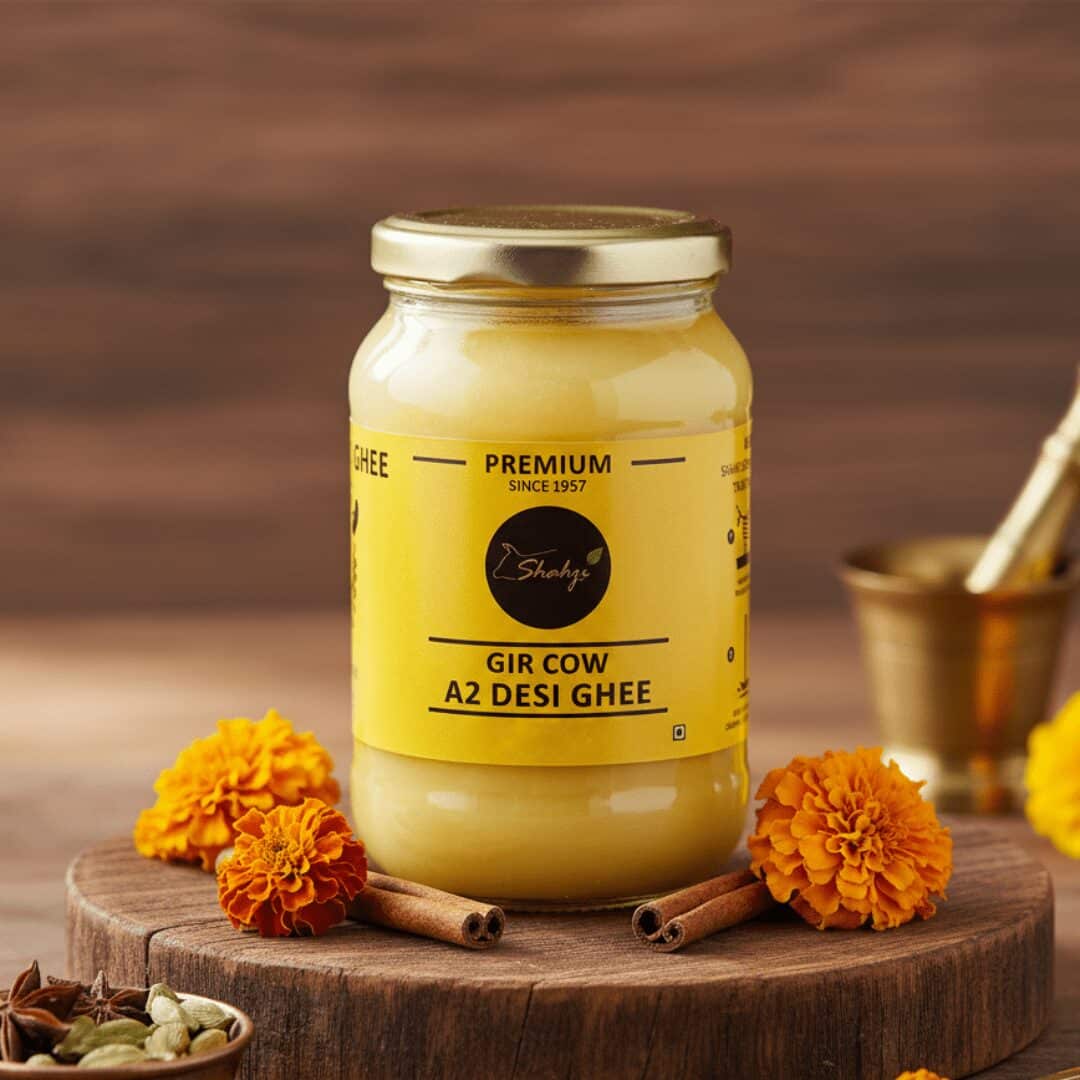
A2 Gir Cow Ghee
500 ML
Best Price: ₹1145 with Coupons

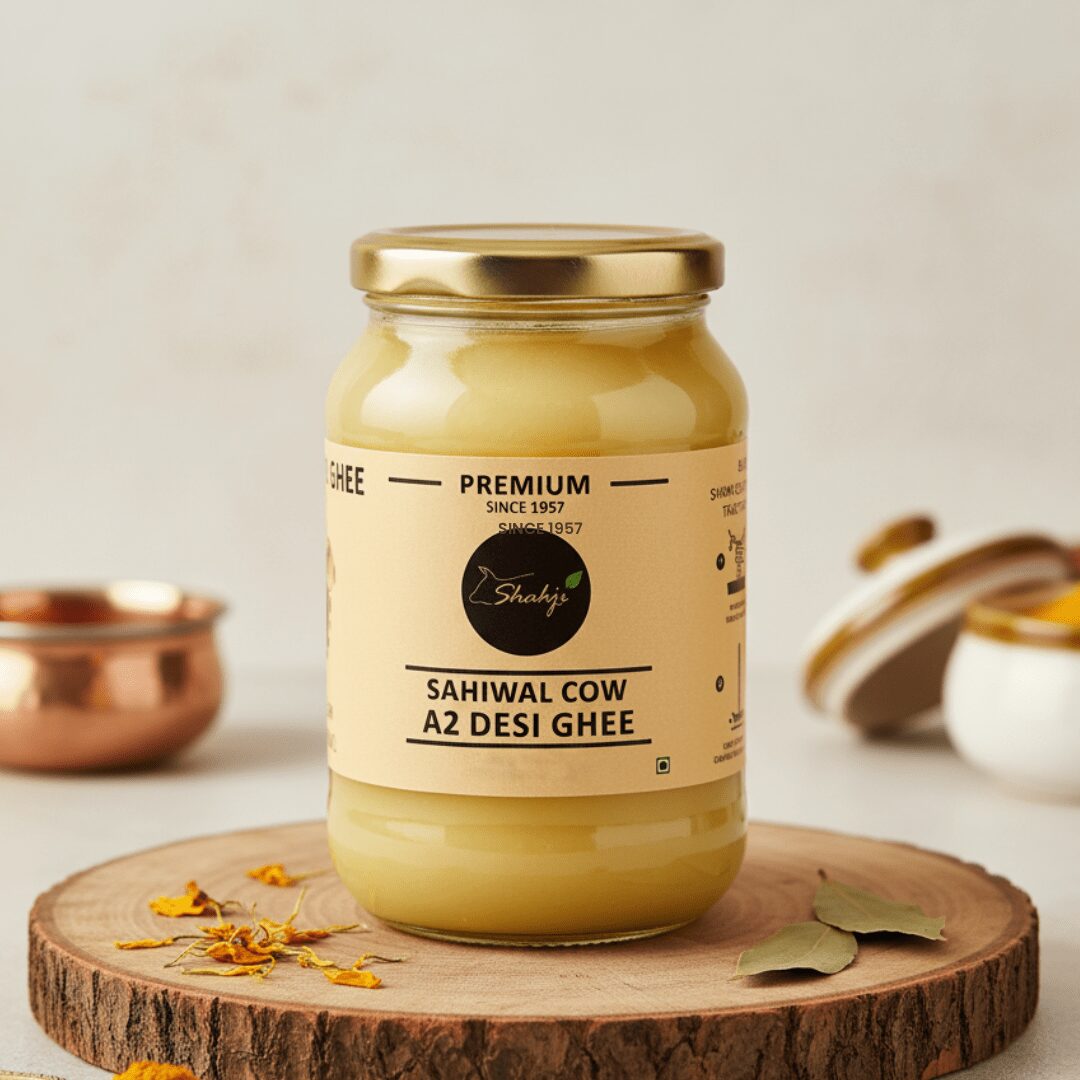
A2 Sahiwal Cow Ghee
500 ML
Best Price: ₹875 with Coupons

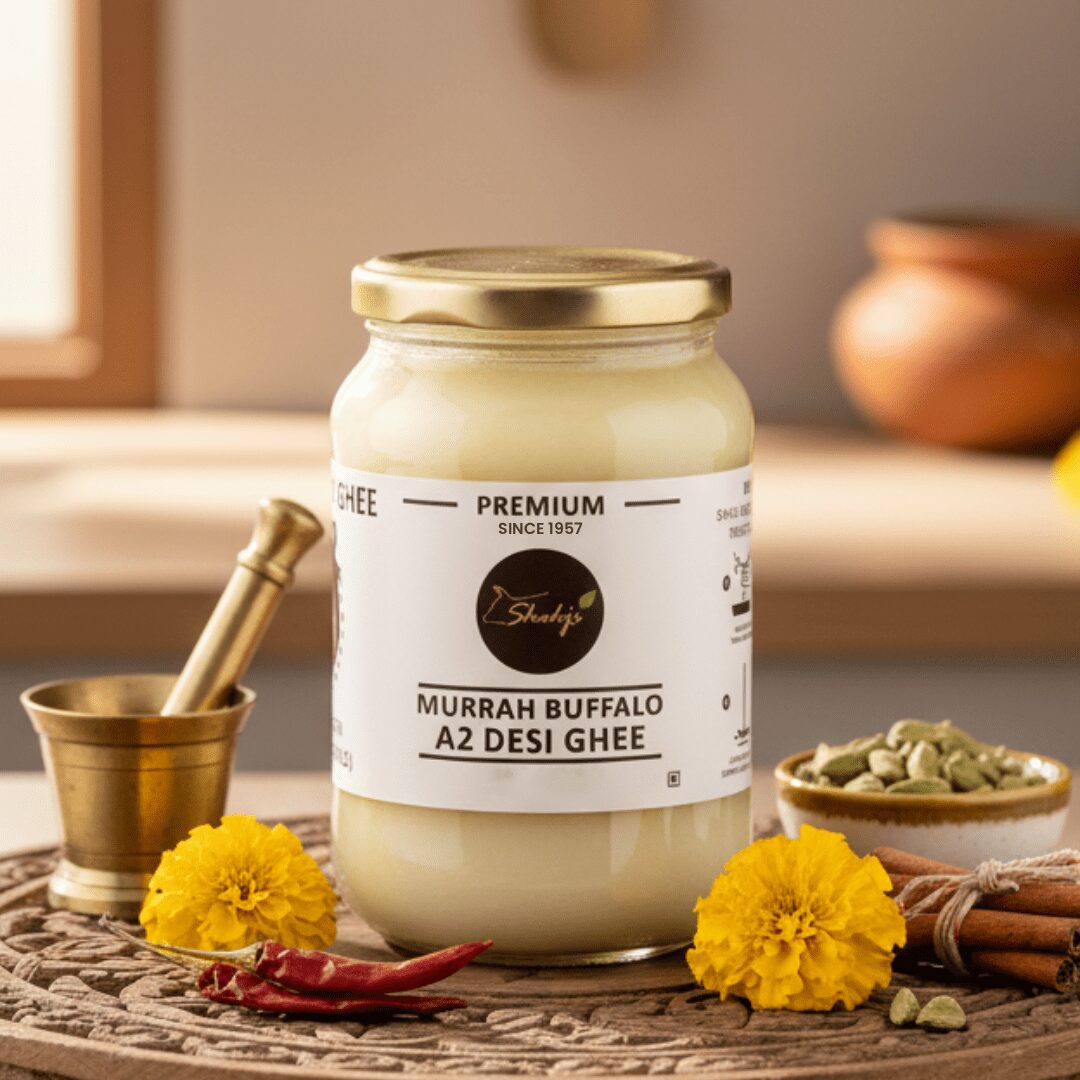
Murrah Buffalo Ghee
500 ML
Best Price: ₹665 with Coupons

Frequently Asked Questions
Which is healthier: cow ghee or buffalo ghee?
Cow ghee is generally considered lighter and easier to digest, while buffalo ghee is richer and denser in texture. The healthier option depends on your digestion, activity level, and dietary needs.
Which ghee is better for daily use?
Cow ghee is usually preferred for daily consumption because it has a lighter texture and smoother digestibility.
Which ghee is better for weight loss?
Cow ghee is often preferred in balanced diets because it feels lighter and easier to consume moderately. However, weight loss mainly depends on overall calorie intake and lifestyle.
Why is buffalo ghee white?
Buffalo ghee naturally appears white or pale cream because buffalo milk contains very little visible beta-carotene.
Why is cow ghee yellow?
Cow ghee contains natural beta-carotene derived from green fodder and grass, which gives it a golden-yellow color.
Is buffalo ghee difficult to digest?
Buffalo ghee is denser and richer in fat, which may feel heavier for some individuals compared to cow ghee.
Which ghee is preferred in Ayurveda?
Traditional Ayurveda generally gives greater importance to cow ghee because it is considered lighter and more suitable for regular use.
Which ghee is better for sweets?
Buffalo ghee is commonly preferred for halwa, laddoo, and festive sweets because of its rich texture and aroma.
Final Verdict: Cow Ghee vs Buffalo Ghee
Both cow ghee and buffalo ghee provide:
- healthy fats
- traditional culinary value
- fat-soluble vitamins
- excellent cooking stability
However, when considering:
- digestibility
- suitability for all age groups
- daily usability
- Ayurvedic preference
cow ghee generally has a slight practical advantage for regular consumption.
Buffalo ghee remains an excellent option for:
- rich culinary applications
- festive sweets
- high-energy diets
- stronger flavor preferences
The best approach is to:
- choose high-quality ghee
- prioritize traditional preparation
- consume in moderation
- maintain an overall balanced diet
Ultimately, the quality of milk sourcing and preparation method matter just as much as whether the ghee comes from cow milk or buffalo milk.
Scientific References
Nutrients (2018): Role of Butyrate in Gut Health
https://www.mdpi.com/2072-6643/10/9/1175
Indian Journal of Medical Research: Effects of Ghee on Lipid Profile
https://www.ncbi.nlm.nih.gov/pmc/articles/PMC3215354/
Charaka Samhita: Ayurvedic Classification of Ghee
https://www.wisdomlib.org/hinduism/book/charaka-samhita-english
Last Updated: 12 May 2026
Related Articles

Sahiwal Cow: Milk Profile, Ghee Characteristics and Native Regions

Grass Fed Ghee vs Grain Fed Ghee – What’s Better?

Best Ghee in India (2026): 14 Best A2 & Bilona Ghee Brands Compared


Sahiwal Cow Ghee in Ayurveda: An Ancient Superfood for Modern Living